In this article
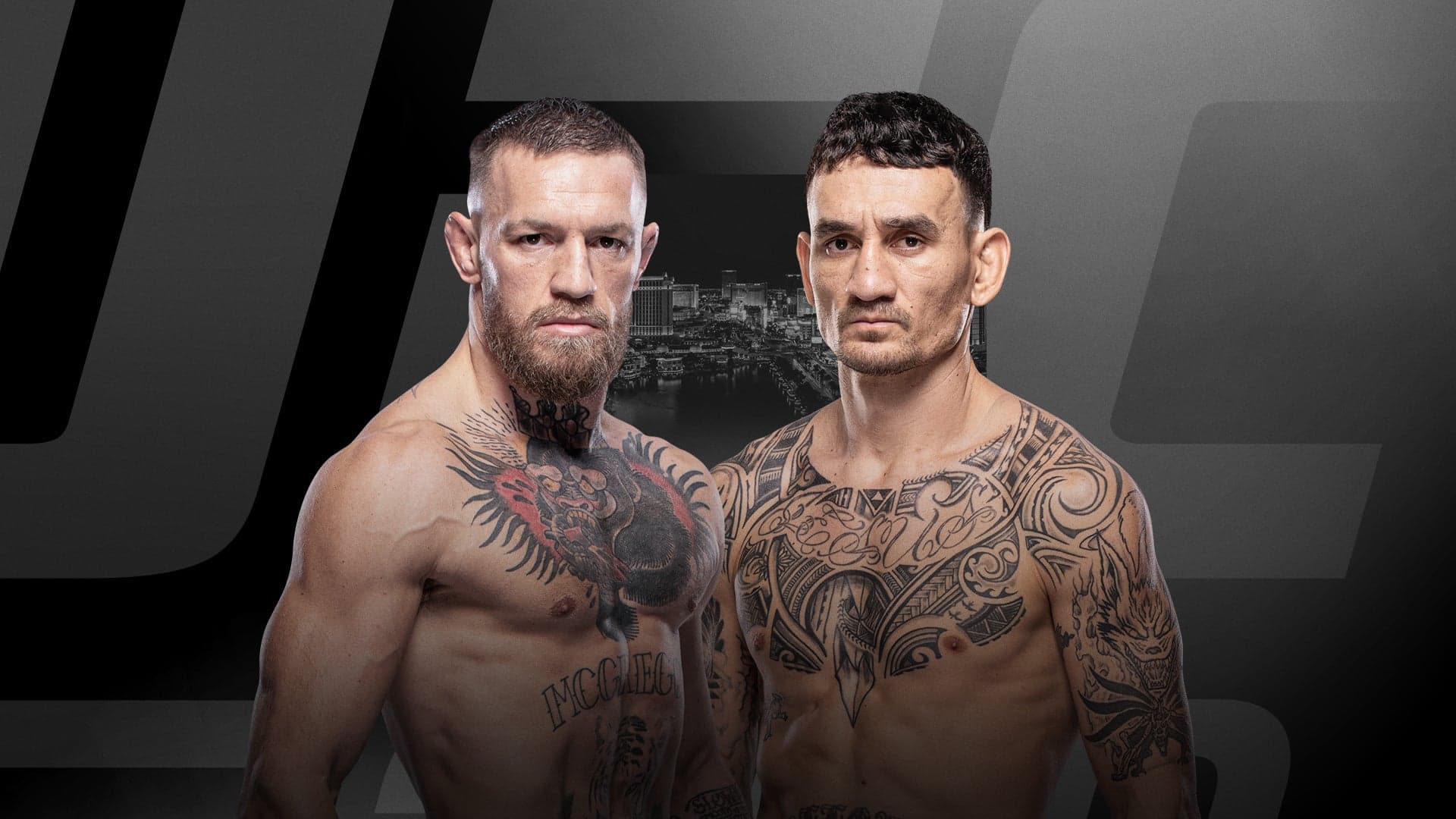
McGregor vs Holloway 2 is the rematch that time forgot — until now. When these two met at UFC Fight Night 26 in Boston in August 2013, they were hungry prospects building reputations. McGregor won by unanimous decision over three rounds, but neither man resembled the fighter they would become. A decade and countless wars later, the question is no longer who would win. It is what the fight means right now.
The First Chapter: UFC 145 and a Different Era
Their 2013 encounter came before the Aldo knockout, before the Alvarez masterclass, before McGregor became the first simultaneous two-division champion. Holloway was 21, still finding his rhythm, still three years away from his first title shot. McGregor dominated on the mat after tearing his ACL mid-fight — a rarity in his career — and took a decision that felt routine at the time.
What followed was divergence. McGregor became the sport’s biggest star. Holloway became its most consistent champion, defending the featherweight belt three times and compiling the longest win streak in divisional history. Both carved legacies. Neither needed to revisit 2013.
Where McGregor Stands Now
Conor McGregor has not won a fight since January 2020, when he stopped Donald Cerrone in 40 seconds. Since then: a submission loss to Dustin Poirier, a knockout loss to Poirier, and two brutal leg breaks against the same opponent. The aura remains. The output does not.
At 36, McGregor’s window is closing. A Conor McGregor rematch against Holloway offers a narrative reset without the pressure of a title fight — a chance to prove he can still compete at elite level against a name opponent who has also tasted decline. McGregor’s record suggests he thrives on these symbolic moments. But symbols do not win fights.
Until the present tense arrived with its uncomfortable questions.
Where McGregor Stands Now
Conor McGregor has not won a fight since January 2020, when he stopped Donald Cerrone in 40 seconds. Since then: a submission loss to Dustin Poirier, a knockout loss to Poirier, and a brutal leg break against the same opponent that sidelined him for years. The aura remains. The output does not.
At 36, McGregor’s window is closing. A Conor McGregor rematch against Holloway at welterweight offers a narrative reset without the immediate pressure of a title fight — a chance to prove he can still compete at an elite level against a marquee opponent. McGregor’s record suggests he thrives on these symbolic moments. But symbols do not win fights.
Holloway’s Crossroads
Max Holloway’s recent run tells a more complex story. After losing his featherweight title to Alexander Volkanovski, Holloway has oscillated between brilliance and frustration. He reclaimed monumental momentum with a stunning last-second knockout of Justin Gaethje for the BMF title at UFC 300—a fight-of-the-year contender—but followed it with a devastating third-round knockout loss to Ilia Topuria.
Source: KHON2
At 34, Holloway is slightly younger than McGregor but carries immense mileage. His 30 UFC appearances have seen him take and give incredible amounts of damage. A legacy fight against McGregor won’t instantly restore his title credentials, but it settles unfinished business and delivers the kind of massive payday that reflects his contributions to the sport.
The Commercial Equation
From a promotional standpoint, McGregor vs Holloway 2 makes perfect sense to anchor International Fight Week. The narrative writes itself: a full-circle rematch between two legends at career crossroads. The UFC has built pay-per-views on less compelling premises. McGregor’s star power remains unmatched, and Holloway’s stock is always high with the fans.
For the Las Vegas market, which thrives on massive combat sports spectacles, this fight represents exactly the kind of legacy matchup that drives premium UFC hospitality experiences. A rematch of this magnitude fits the T-Mobile Arena perfectly, promising to be one of the biggest events of the year.
Legacy or Desperation
The uncomfortable truth is that McGregor vs Holloway 2 only makes sense because both men are currently on the outside looking in at their respective divisional titles. In 2018, when both held belts, this rematch would have been an all-time champion-vs-champion superfight. Now, it feels like two greats trying to prove they still belong in the conversation.
That does not make it unworthy. Sports history is filled with meaningful late-career rematches — fights that matter precisely because the stakes are personal rather than institutional. This is not about a gold belt. It is about proving that the first result was not a fluke, or that time has rewritten the script, or simply that there is still something left to prove.
The Verdict
McGregor vs Holloway 2 at UFC 329 is a pure legacy fight — but whose legacy it serves depends entirely on the result. For McGregor, a win suggests he can still compete with elite modern competition and potentially set up one final high-profile run. For Holloway, it is validation that he has surpassed the man who once beat him, alongside a massive financial reward for years of service at the top.
The alternative reading is less romantic. This could be two fading stars chasing relevance, a fight that diminishes rather than elevates. The line between legacy and last dance is thinner than either man would admit.
But in combat sports, we rarely get to choose our endings. Sometimes the story demands one more chapter — even if we are not sure how it will read.