Home Improvement
Our remodeling columnist offers insight into the pros and cons of taking over a project.
Shutterstock/John Panella
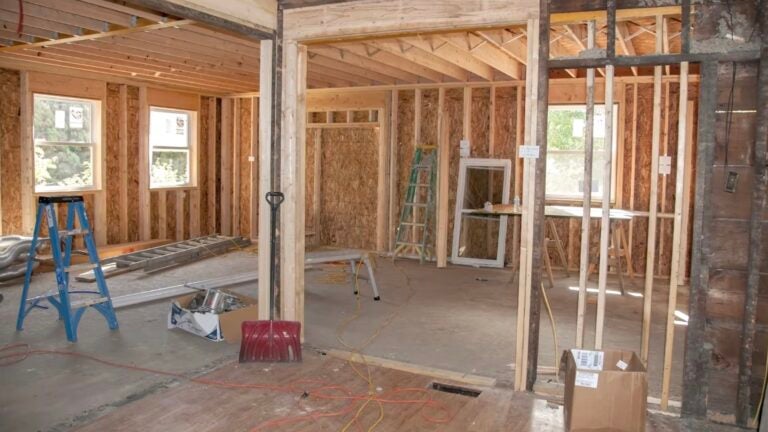
There is an interesting property for sale in Hyde Park. It is a stand-alone carriage house behind another house that has been “roughed in,” meaning some interior framing is done and some plumbing and electrical utilities have been installed, but the interior is vastly unfinished. The exterior is in new condition and appears freshly painted. The price is very appealing relative to similar properties in the Boston area. It looks like a bargain — all you have to do is buy it, hire some contractors, maybe do some work yourself, and you have instant equity! What could go wrong?
Well, maybe nothing if the current owner did all their due diligence (and it appears that for this particular property, they did). However, buying a partially built or partially remodeled home can be fraught with problems, and you most definitely want to be aware of potential pitfalls.
The following are some things to keep in mind before buying an unfinished property:
Hire a trusted attorney
This is the first thing you should do. The real estate agents involved in the sale are a tremendous resource, but you always want to have somebody in your corner with only your best interests in mind. First and foremost, ask: why is the property unfinished? If the current seller ran out of money to finish it and is looking to simply sell and cut their losses, there could be problems. There could be liens on the property from unpaid contractors or worse — a contractor who got hurt on the job and there was no workers’ compensation policy in place. Your attorney should uncover these potential issues with a proper title search. This is a good example of the type of thing that may be lurking below the surface of an unfinished property.
Zoning
Is the property zoned for a single-family residence? Just because it is built as a single-family doesn’t mean it can be occupied as such. Again, your attorney and agent will help with this — plus that type of information is a matter of public record and can be found in the city or town hall. If the property isn’t zoned for a single-family home, you are looking at many months of filing applications for variances/special permits with the zoning board. Once the application is accepted, you then have hearings before the board. Finally, assuming your application is approved, there are appeal periods that can last another 30 to 60 days. Depending on your timeline and turnaround time for a sale, these could all be serious impediments.
DIY construction and hiring contractors
Once you have cleared the zoning and occupancy hurdles, you now have to finish the work. You will need to pull your own permits to finish it; you are not allowed to work off someone else’s permit. In other words, after all you went through for zoning and occupancy, you now have to file for a new building permit. As a homeowner, you can file and receive a building permit to finish the work. Be aware that the work still must conform to current building codes. So, if you as a homeowner want to finish the carpentry, it is best that you buy the current code book and do your homework. ‘
You may be doing some work yourself, but you will also be hiring contractors. An important point for a homeowner pulling their own permit is that you don’t have access to the state’s Guaranty Fund. Contractors pay into this fund regularly. When you hire a licensed contractor to do the work, you have access to arbitration for unfinished work and up to $25,000 if the contractor refuses to pay for a judgment in your favor.
Check with the building department to make sure that any work already done has been inspected and has passed, ensuring it is up to code. The last thing you want to happen is that you buy a property that you think has the plumbing already installed, then find out it doesn’t meet code and now you have to rip it out and pay to install it again. That will put a dent in your budget.
Insurance
Whether you are pulling your own permits or not, one of the most important areas of due diligence is insurance. If you are hiring a general contractor to do the work, you want to make sure they have workers’ compensation and general liability insurance policies. The general liability should cover at least $1 million should something catastrophic happen. The workers’ compensation policy should be current and have your name as a certificate holder.
You also want to get the contact information from your contractor for their insurance companies and get the policies emailed to you directly. There could be one or several insurance companies for the various policies. When hiring a general contractor, all this insurance will fall under their policy, and you will be covered. If you are acting as your own general contractor, you will need to get all these various policies from each subcontractor you bring onto your property.
If all this sound daunting, it should. At the same time, it should not deter you from purchasing an unfinished property if you are up to the challenge. When you carefully work through the pros and cons, for the right person it could be an excellent investment. It could also be a wonderful way to put your own stamp and personality into a home you hopefully will enjoy for years to come.
We want to here from you: If you bought an unfinished house and made it your own, write in and share your story.
Mark Philben is the project development manager at Charlie Allen Renovations in Cambridge. Send your questions to [email protected]. Questions are subject to editing. Subscribe to the Globe’s free real estate newsletter — our weekly digest on buying, selling, and design — at Boston.com/address-newsletter.
Address Newsletter
Our weekly digest on buying, selling, and design, with expert advice and insider neighborhood knowledge.