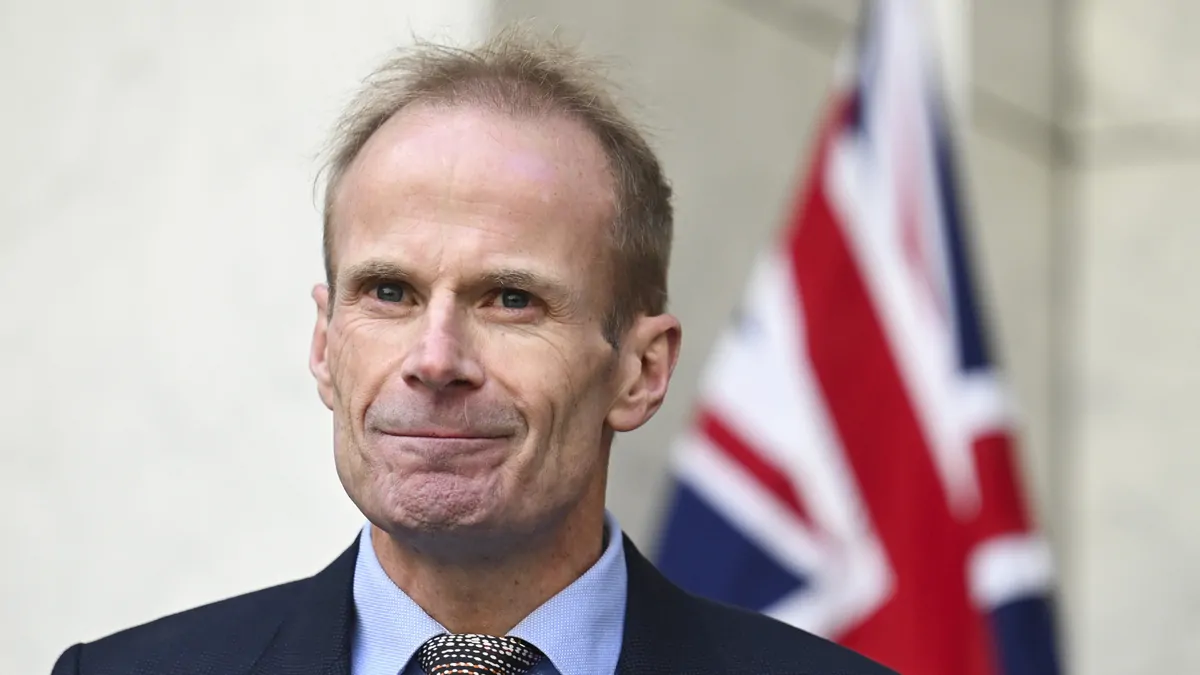
Pioneering scientist Richard Scolyer has died after a long battle with brain cancer, a fight he used to boost scientific knowledge and benefit future patients.
The renowned melanoma pathologist and father of three, who died aged 59 on Sunday, helped save thousands of people’s lives during his career through groundbreaking skin cancer research.
Along with Professor Georgina Long, he took the disease from being a death sentence to largely curable through treatment that activates a patient’s own immune system, bringing hope and healing to many.
Sign up to The Nightly’s newsletters.
Get the first look at the digital newspaper, curated daily stories and breaking headlines delivered to your inbox.
By continuing you agree to our Terms and Privacy Policy.
Born in Tasmania, Scolyer was diagnosed with an incurable and aggressive stage four brain cancer named glioblastoma in June 2023, aged 56, and given just six to eight months to live.
The internationally respected clinician undertook a world-first experimental treatment based on his and Prof Long’s melanoma research, despite the risk it could cut life even shorter.
Immunotherapy before surgery to remove the tumour and a personalised vaccine helped stave off the disease for almost two years.
Scolyer shared insights on his cancer journey, amassing thousands of followers on social media and earning praise for his bravery in advancing scientific understanding.
But in March 2025, he revealed a recurrent tumour had returned and was quickly growing like tree roots in the left side of his brain after a complex surgery was unable to remove the entire mass.
He told followers the immunotherapy treatments and vaccine might have made a difference and the potential benefits of the experimental procedures were worth the risk.
“More work needs to be done in a clinical trial to prove this,” he said.
“At worst, I’ll leave the legacy of increased scientific knowledge to benefit future brain cancer patients.”
Scolyer was a keen triathlete and former head prefect and a dux at high school before studying medicine at the University of Tasmania.
After four years of clinical medicine, he went on to specialise in pathology, completing his training at the University of Sydney, where he became a professor.
He was also a senior staff specialist at Royal Prince Alfred Hospital in Sydney.
Widely regarded as the world’s leading melanoma pathologist and one of the world’s top melanoma researchers, Scolyer provided clinical consultation for the diagnosis of difficult pigmented lesions, receiving more than 2000 cases from around the globe each year.
Over two decades, he also became the world’s most-published melanoma pathologist, writing more than 700 scientific articles on the cancer.
Scolyer and Prof Long, who were co-medical directors at the Melanoma Institute of Australia, were jointly awarded Australian of the Year in 2024 and met King Charles during the monarch’s visit to Australia in the same year.
In September, Prime Minister Anthony Albanese unveiled a $5.9 million commitment to establish the Richard Scolyer Chair in Brain Cancer Research at the Chris O’Brien Lifehouse in Sydney.
The prime minister celebrated Scolyer and Prof Long as representatives of “the very best of this country”.
“Skill, tenacity and courage are embodied in this fine Australian inspiring so many Australians through his own cancer journey,” he said at the time.
Humble, Scolyer said he never aimed to be honoured in name and had just wanted to make a difference.
Scolyer was appointed Officer of the Order of Australia (AO) for distinguished service to medicine, particularly in the field of melanoma and skin cancer, in 2021.
He was also a World Health Organisation expert member and received multiple awards from medical, research and pathology organisations worldwide.
He also represented Australia as an age-group triathlete, and his book Brainstorm, written with Garry Maddox, won Social Impact Book of the Year at the 2025 Australian Book Industry Awards.