Courtesy: FunTimes Collage
Summer is here, and with it comes a flurry of activities like beach outings, camping, road trips, and nature excursions, among others. For many, it is also a season for reading: a chance to step away from the daily rush, relax, and immerse oneself in stories that educate, inspire, and entertain.
Summer offers book lovers an ideal opportunity to explore literature by authors from around the globe. Among the many rich bodies of work available, African literature continues to command a strong and growing readership. Whether romance, science fiction, fantasy, thriller, horror, historical fiction, or contemporary realism, African writing offers a vast and compelling literary landscape.
Over the years, African literature has gained global recognition. From the pioneering works of Chinua Achebe to the thought-provoking writings of Ngũgĩ wa Thiong’o, African writers have consistently offered diverse perspectives on both the African and human experience.
What makes these works especially compelling is their ability to root deeply local stories in universal themes. Though grounded in African communities, cultures, and histories, they speak to issues that resonate across continents. They humanize complex realities while offering readers a richer understanding of the world they inhabit.
This summer, consider adding the following African books to your reading list.
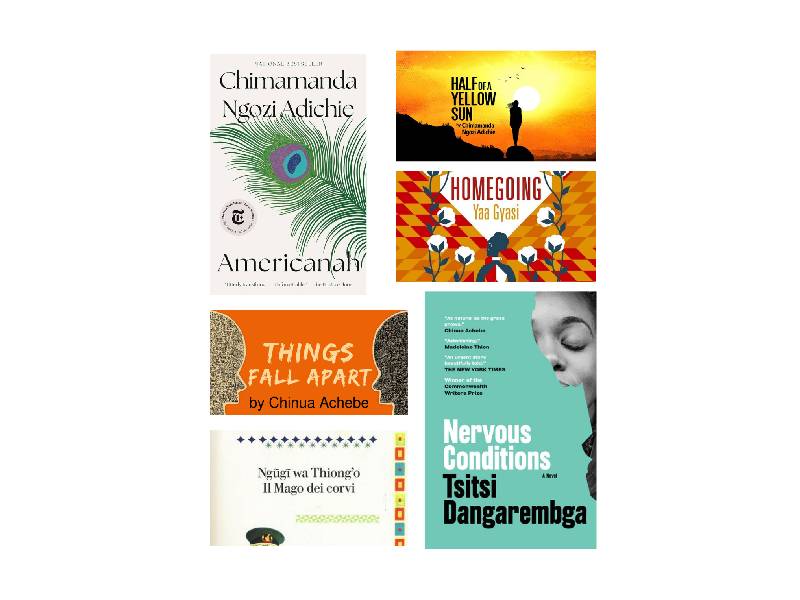
Things Fall Apart by Chinua Achebe
Source: Itanile
Things Fall Apart is widely regarded as one of the most influential African novels ever written. It explores the collision between traditional Igbo society and European colonialism, forcing readers to confront the complexities of cultural change and the consequences of imposed worldviews.
The novel follows Okonkwo, a respected Igbo warrior determined to escape the legacy of his father, Unoka, whom he sees as a failure. Driven by ambition, he achieves wealth and status but becomes consumed by pride and fear of weakness. After taking part in the killing of Ikemefuna, a boy he had helped raise, Okonkwo suffers deep emotional turmoil. He is later exiled after accidentally killing a clansman.
During his exile, Christian missionaries and British colonial authorities gained influence in his village, disrupting traditional life. When Okonkwo returns, he finds his society transformed. Unable to reconcile with the changes and frustrated by his people’s resistance, he kills a colonial messenger and ultimately takes his own life.
The novel powerfully explores tradition, masculinity, cultural conflict, colonialism, and the tragic consequences of rigid pride in the face of change.
Half of a Yellow Sun by Chimamanda Ngozi Adichie
Source: BBC
Another essential read is Half of a Yellow Sun by Chimamanda Ngozi Adichie. Set during the Nigerian Civil War, the novel presents a deeply human story of love, loss, survival, and national identity. It offers insight into one of Africa’s most painful historical moments, where millions were displaced, and countless lives were lost.
The story follows Odenigbo, Olanna, Kainene, and Ugwu in 1960s Nigeria during the Biafran War. Ugwu, a village boy, becomes a houseboy for Odenigbo and is exposed to political ideas that shape his worldview. Odenigbo is in a relationship with Olanna, while Richard, a British writer, falls in love with Olanna’s twin sister, Kainene.
As political tensions escalate, ethnic violence erupts, leading to massacres of Igbo people. Olanna narrowly escapes the violence in Kano. War soon breaks out after Biafra declares independence, plunging the characters into displacement, hunger, and constant air raids.
Amid the chaos, relationships fracture and evolve. Ugwu is drawn into the realities of war, Olanna and Odenigbo struggle to survive and preserve their love, and Kainene leads refugee efforts before mysteriously disappearing after crossing enemy lines. Despite extensive searches, her fate remains unknown.
The war ended with Biafra’s defeat and Nigeria’s reunification, leaving devastation in its wake. Ugwu survives and eventually reflects on the horrors he witnessed, while the novel closes on themes of memory, silence, and unresolved loss.
Homegoing by Yaa Gyasi
Source: Bromleyhouselibrary
Homegoing by Yaa Gyasi traces the legacy of slavery through the descendants of two half-sisters, Effia and Esi, separated by the transatlantic slave trade. The novel spans centuries, moving between Africa and the United States to reveal how history shapes identity across generations.
Effia remains in Cape Coast Castle and is tied to the British colonial presence, while Esi is captured and sold into slavery in America. From this single rupture, two family lines emerge, one in Africa and one in the diaspora, each shaped by different forms of suffering and survival.
Back home, descendants grapple with war, colonialism, and internal conflict. In America, Esi’s lineage endures slavery, racial violence, segregation, and systemic oppression. Across both continents, themes of trauma, identity, loss, and inheritance persist.
Eventually, the two family lines symbolically reconnect when descendants meet and confront the shared history rooted in Cape Coast Castle. The novel underscores how slavery’s impact transcends generations and geography.
Read also: 4 Must-Read Black Books From 2025 Award Seasons To Read In 2026
Nervous Conditions by Tsitsi Dangarembga
Source: Kobo
Nervous Conditions by Tsitsi Dangarembga examines gender, education, and ambition through the story of Tambu, a young Zimbabwean girl determined to change her circumstances.
After the death of her brother Nhamo, Tambu takes responsibility for her education and eventually gains support from her uncle, Babamukuru, a missionary and school head. She moves to the mission compound, where she encounters both opportunity and tension.
There, she becomes close to her cousin Nyasha, who struggles under the weight of patriarchal authority and colonial influence. Nyasha’s resistance eventually manifests in psychological distress. Babamukuru’s strict control over his family creates deep internal conflict, especially for Nyasha and Tambu.
As Tambu excels academically and earns a scholarship, she begins to see the emotional and cultural costs of the system she is succeeding in. By the end, Nyasha’s breakdown and Tambu’s growing awareness signal a shift in her understanding of identity, power, and independence.
Wizard of the Crow by Ngũgĩ wa Thiong’o
Source: MalindiKenya.net
Wizard of the Crow is a satirical exploration of authoritarianism and political corruption in the fictional Free Republic of Aburiria. The country is ruled by The Ruler, an autocratic leader surrounded by sycophantic ministers who compete in absurd displays of loyalty.
Beneath the spectacle of power lies widespread suffering, poverty, unemployment, poor healthcare, and repression. Despite this, citizens live in fear of speaking out.
Resistance emerges through Nyawira and the Voice of the People movement, which advocates for collective liberation. Kamiti, an unemployed graduate, inadvertently becomes the “Wizard of the Crow,” a symbolic figure of healing and resistance. Together, Kamiti and Nyawira embody the possibility of change through solidarity and courage.
The novel uses satire and imagination to expose dictatorship while affirming the power of collective action.
Americanah by Chimamanda Ngozi Adichie
Source: Amazon.ca
Americanah by Chimamanda Ngozi Adichie follows the lives of Ifemelu and Obinze, two Nigerian lovers whose lives are shaped by migration, identity, and separation.
As students, they are deeply in love, but university strikes and economic challenges force Ifemelu to move to the United States. There, she faces loneliness, racial discrimination, and hardship, eventually building a new identity through her popular blog on race in America.
Obinze, unable to join her, moves to Britain as an undocumented immigrant before being deported back to Nigeria. He later becomes a successful businessman but remains emotionally tied to Ifemelu.
Years later, Ifemelu returns to Nigeria, and the two reconnect, confronting unresolved feelings and the consequences of their choices. Their reunion forces them to reassess love, identity, and belonging in a changing world.
As summer unfolds, it offers the perfect opportunity to refresh your reading list and explore the richness of African literature. Whether your interest lies in history, politics, culture, migration, leadership, or personal growth, there is an African story waiting to engage you and enrich your summer experience.
Okechukwu Nzeribe works with the Onitsha Chamber of Commerce, in Anambra State, Nigeria, and loves unveiling the richness of African cultures. okechukwu.onicima@gmail.com