The glamour associated with Bollywood attracts people from every strata of society as it is believed that if you make it in the movies, you will be swimming in riches; but, despite being the most successful star, one’s fortunes can turn overnight, and they can lose it all. And the same happened with the yesteryear star Bharat Bhushan, who was once considered the biggest star of the 1950s. Bharat Bhushan worked in films like Baiju Bawra, Barsaat Ki Raat, Mirza Ghalib, among many others, and while he made enough money that could have sustained him for a lifetime, he lost it all after making some bad monetary decisions. He had to sell all three of his bungalows in Bandra, one of which was the popular mansion named ‘Aashirvaad’, which was later owned by stars like Rajendra Kumar and Rajesh Khanna.
Bharat Bhushan’s films continue to inspire Ranveer Singh
Bharat made his debut in 1941 with a film called Chitralekha, but it was in the year 1952 that his star rose when he appeared in Baiju Bawra and Anand Math. Baiju Bawra continues to enjoy a fan following as Sanjay Leela Bhansali has been planning to remake the film for a few years now. Reportedly, he wanted to cast Ranveer Singh in the lead role, but the film never materialised. The 1960 hit Barsaat Ki Raat, where he also co-wrote the script was another of his hits, and such was the fame of this film that over six decades later, the film’s song “Na To Karavan Ki Talash Hai” was remade for Dhurandhar.
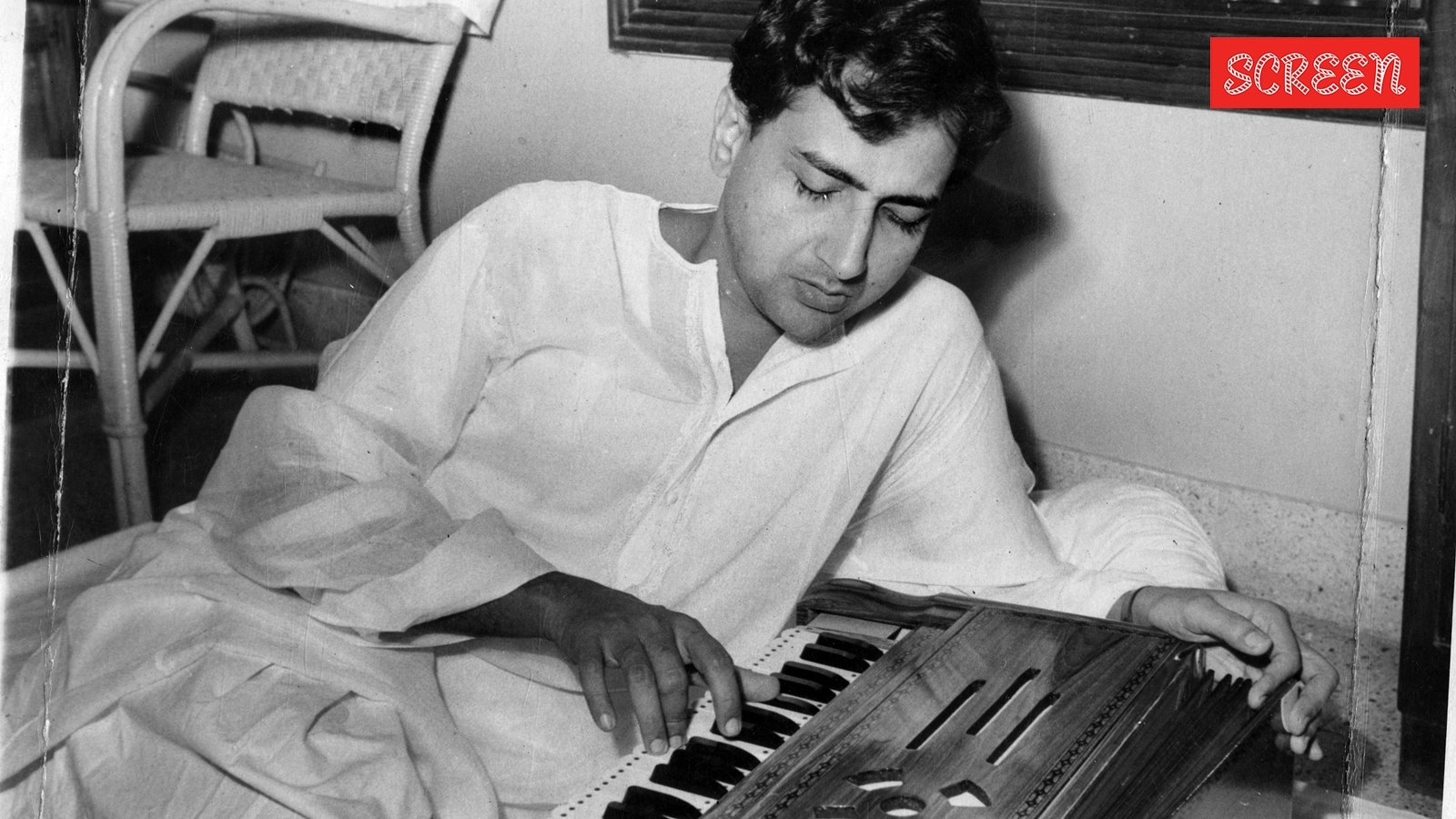
Bharat Bhushan was known for his love for books. (Photo: Express Archives)
His contemporaries included stars like Raj Kapoor, Meena Kumari, Dilip Kumar, Nargis, Madhubala and his name was included in the same league at that time, but things changed rapidly after Bharat Bhushan decided to invest his own money in producing films. Back in those days, the film industry was financed by those who worked in the movies. There was no corporate funding, bank finances were involved so there was an actual risk of losing all of the money that one has invested in a film. The idea of music rights, satellite rights, OTT rights did not exist at this point as films were only played at cinema halls, which were sparsely located throughout the country. As the Hindi film industry gradually adopted to corporate structures and studios came in, it has become more professional and a safer business proposition. Filmmakers like Karan Johar have told SCREEN that if the film is properly budgeted, makers
Bharat kept making one bet after another, and started losing a significant chunk of wealth that he had accumulated by then. The flop films affected his reputation as an actor as well, as now the big filmmakers of the film industry were not willing to cast him. To survive, he sold his homes, his cars, and bought a flat in Mumbai’s Malad area, which was considered to be on the outskirts in those days. But despite all of this, he didn’t stop working. In fact, as per his daughter Aparajita Bhushan, he was a man of integrity so he continued to do whatever work he got, even if they were smaller blink-and-miss roles.
ALSO READ | Decades before cancel culture, Madhubala survived an orchestrated smear campaign with a loaded gun and armed guards
When Amitabh Bachchan saw the yesteryear star at a bus stop
It was during this era of his life when Amitabh Bachchan once spotted him at a bus stand. The yesteryear star was standing in a queue to board a bus, and Amitabh was shocked to see how drastically his fortunes had changed. Big B took to his blog in 2008 to share that incident. “As I drove by Santa Cruz one morning for work I saw Bharat Bhushan, the great romantic heartthrob of the 50s, hero of some of the most successful musicals of the times, standing in a queue at a bus stop! An ordinary citizen. Part of the crowd. Alone, unnoticed. No one recognising him. No one knowing who he was,” he wrote.
Bachchan wondered if he should stop his car and drop him off to his destination but stopped, because he didn’t want to embarrass Bharat. “I wanted to stop and ask him into the car to drop him to his destination, but I could not muster enough courage. I feared I would embarrass him. And I drove on. But that visual has remained with me and will remain with me forever. It could happen to anyone. To any one of us,” he wrote.
Story continues below this ad
Journalist Ali Peter John wrote about the tragic career of Bharat Bhushan where he mentioned that “he kept falling till he had to live in a one-room apartment and work in bit roles to make a living. He had to finally shift to a smaller flat in Malad where he died a miserable death and there were hardly eight people at his funeral.”
Bharat Bhushan with Nargis. (Photo: Express Archives)
‘My father didn’t work as a watchman’
At one point, there were rumoours that Bharat Bhushan had to work as a watchman to make ends meet towards the end of his life. However, his daughter Aparajita Bhushan, refuted those reports in a chat with Navbharat Times in 2020. Aparajita is best known for playing Mandodari in Ramanand Sagar’s Ramayan. “I have read several reports which stated that my father’s condition was so poor towards the end that he had to work as a watchman and had to travel by bus to reach his workplace. All these claims are untrue and it saddens me that people are putting out such wrong information and disrespecting him,” she said.
Calling him a “distinguished personality”, she said that he “departed this world with the same pride and honour that he had while he was alive”. Talking about the actor’s hard times, she said, “It is true that he used to produce films and it earned him a lot of money. Some films, such as Dooj Ka Chand, failed at the box office and he had to incur heavy losses because of it, but we sold off three of our bungalows at Pali Hill, Bandra Link Road and Pune, and got over it,” she said.
“Papa also bought himself an apartment in Malad West and led a happy and comfortable life there. He breathed his last in the same house. In the meantime, he took up character roles in many films and did it with utmost dignity and honour.”
Story continues below this ad
Bharat Bhushan died due to a cardiac arrest. He was rushed to the hospital, but could not make it. His daughter was by his side when he passed away. He died at the age of 72, in 1992.
DISCLAIMER: This article reflects on historical events and personal narratives regarding financial hardship, grief, and the life challenges faced by public figures. It is intended strictly for biographical and educational purposes and does not offer financial advisory or professional guidance.