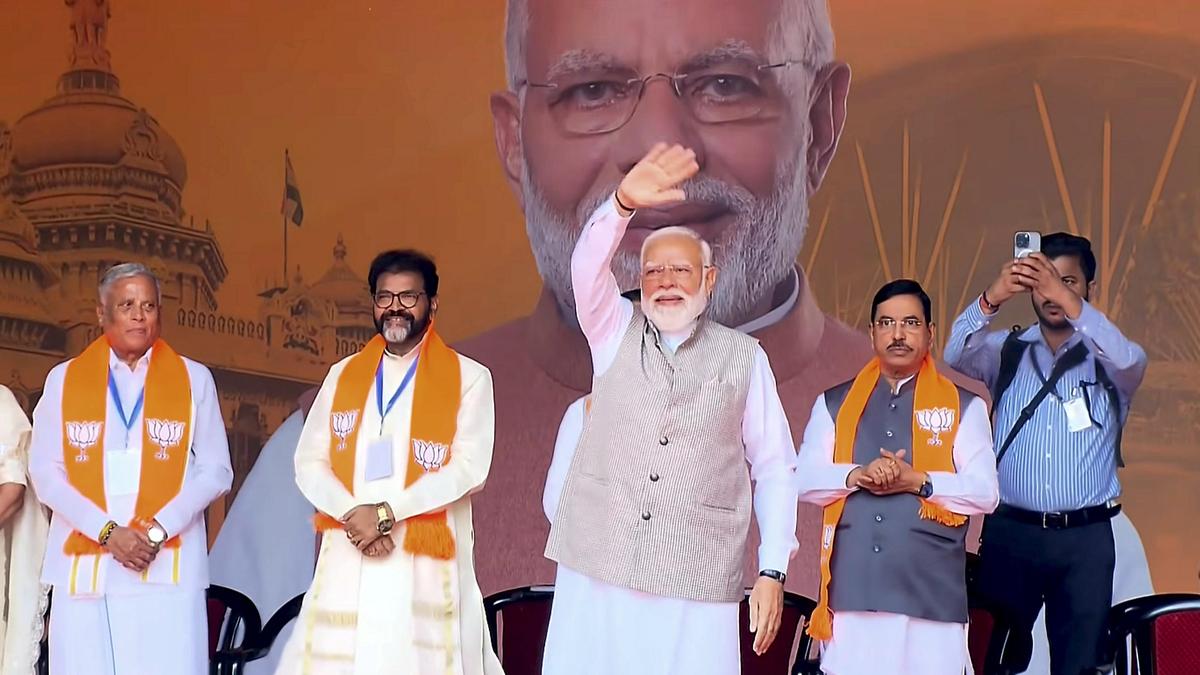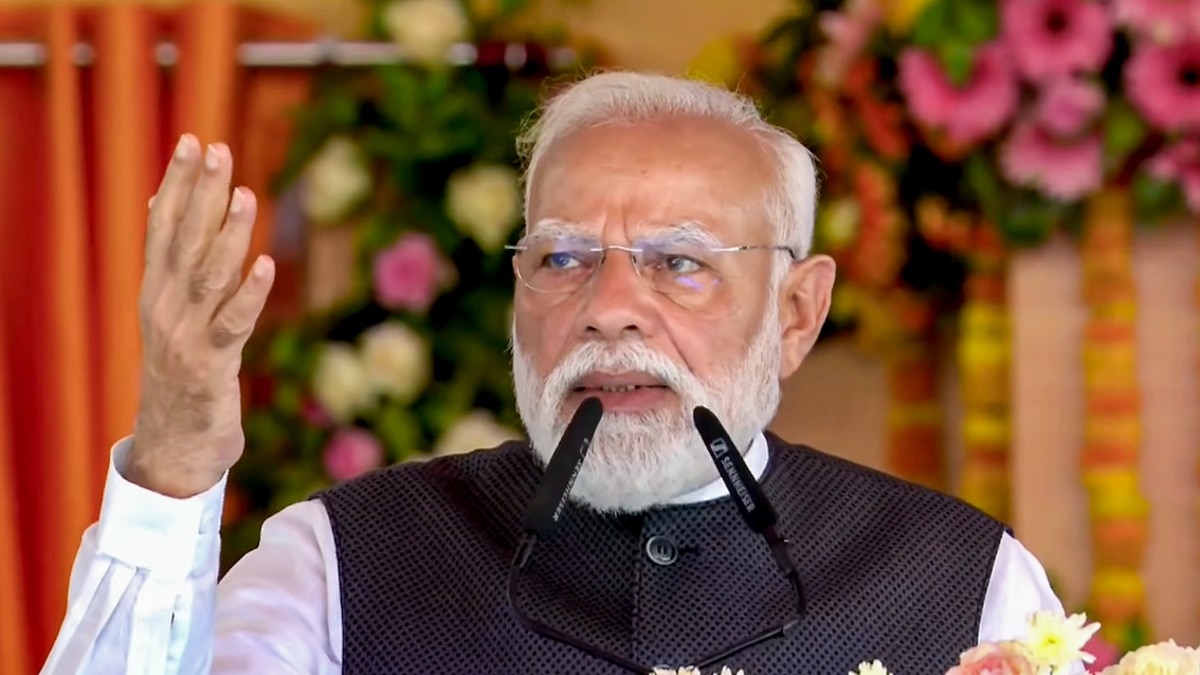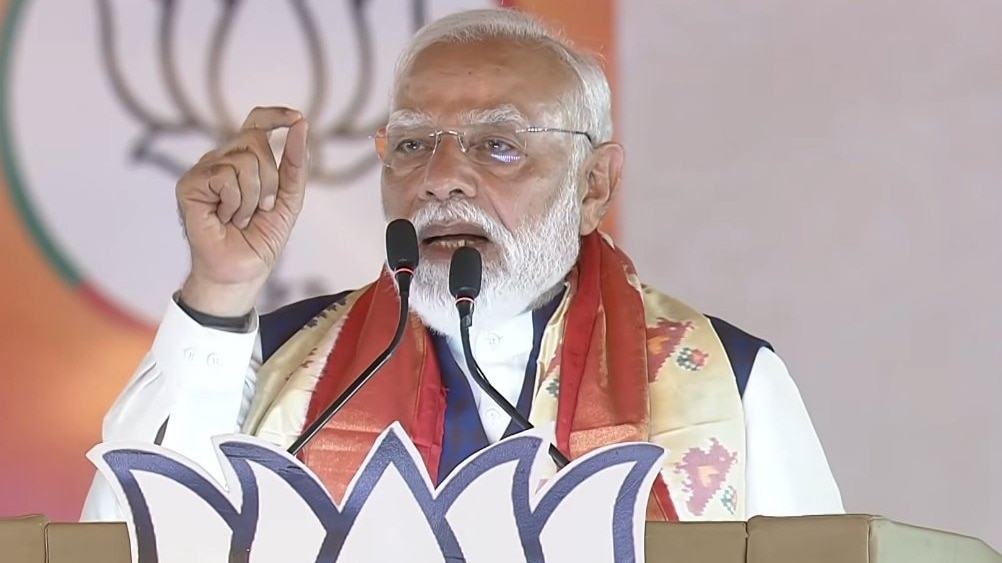
As fears of a sharp petrol and diesel price hike grow amid the global oil shock triggered by the Middle East war, Prime Minister Narendra Modi on Sunday urged people to revive work-from-home practices, cut fuel consumption and even avoid buying gold for weddings for one year to help the country save foreign exchange.
PM Modi painted a picture of a world battling supply chain disruption, soaring crude prices and economic uncertainty, while pitching fuel conservation as a national responsibility.
“During the Corona period, we adopted work from home, online meetings, video conferences and developed many such systems. We had also become accustomed to them,” Modi said.
“Today, the need of the hour is that we restart those practices, as it would be in the national interest, and we must once again give them priority.”
#WATCH | Secunderabad, Telangana | On the impact of West Asia conflict, Prime Minister Narendra Modi says, “… Gold purchases are another area where foreign exchange is used extensively… In the national interest, we must resolve not to purchase gold for a year, no matter how https://t.co/lNWTmHlf4q pic.twitter.com/konOsJ7Okp— ANI (@ANI) May 10, 2026
PM LINKS FUEL SAVING TO NATIONAL INTEREST
The Prime Minister’s remarks come at a time when global crude oil prices have surged from nearly USD 70 per barrel to around USD 126 per barrel due to escalating tensions in West Asia and disruptions around the Strait of Hormuz, a critical global oil route.
Without directly announcing a price increase, PM Modi repeatedly stressed the need to reduce petrol and diesel consumption.
“Petrol-diesel has become so expensive across the world. It is the responsibility of all of us that the foreign exchange spent on purchasing petrol-diesel should also be saved by conserving petrol-diesel,” he said.
In one of the most striking moments of the speech, the PM appealed to citizens to rethink discretionary spending as the country faces economic pressure from rising global energy costs.
“I would appeal to people not to buy gold for weddings for one year,” he said.
#WATCH | Secunderabad, Telangana | On the impact of West Asia Conflict, Prime Minister Narendra Modi says, “In this time of global crisis, we have to make a resolution keeping duty paramount and fulfil it with complete dedication. A big resolution is to use petrol and diesel https://t.co/fP7yTRIUHb pic.twitter.com/KEQOScsIK8— ANI (@ANI) May 10, 2026
PETROL, DIESEL PRICES MAY RISE BEFORE MAY 15
The Prime Minister’s remarks came as government and industry sources indicated that fuel prices in India could soon see their first major revision in nearly four years.
Sources told India Today TV that petrol and diesel prices are likely to be increased before May 15 as oil marketing companies battle massive under-recoveries caused by soaring crude prices.
According to sources, Indian Oil, Bharat Petroleum and Hindustan Petroleum are together facing losses of nearly 30,000 crore per month.
At current global crude prices, the government and oil companies are effectively absorbing nearly 24 per litre on petrol and 30 per litre on diesel to shield consumers from the full impact of the crisis.
If approved, petrol and diesel prices could rise by around 4-5 per litre, while domestic LPG cylinders may become costlier by 40-50.
GLOBAL WAR, OIL SHOCK AND INDIA’S RESPONSE
The worsening energy crisis has been triggered by prolonged instability in the Middle East, which has disrupted shipping routes and raised fears over global crude supply.
Nearly 20 per cent of the world’s oil passes through the Strait of Hormuz, where movement has remained heavily affected due to the conflict.
While countries such as Bangladesh introduced fuel rationing and Sri Lanka reduced working days to manage the crisis, India has so far avoided shortages and long queues at petrol pumps.
Officials said India responded by ramping up LPG production from 36,000 tonnes per day to 54,000 tonnes, diversifying crude imports from Russia, the US and West Africa, and pushing refineries to operate at more than 100 per cent capacity.
The Centre also cut excise duties earlier to cushion consumers from rising international prices.
– Ends
Published By:
Sonali Verma
Published On:
May 10, 2026 20:06 IST