The Bombay High Court, which on Thursday (May 7, 2026) upheld the acquittal of 22 accused persons in the 2005 case of alleged fake encounter of Gujarat gangster Sohrabuddin Sheikh, has stated that the prosecution had failed to establish a case. A copy of the court order was made public on Friday (May 8).
A Division Bench of the Bombay High Court, comprising Chief Justice Shree Chandrashekhar and Justice Gautam Ankhad, dismissed appeals filed by Sohrabuddin Sheikh’s brothers, Rubabuddin Sheikh and Nayamuddin Sheikh. The appeals challenged a December 21, 2018 trial court order that acquitted 22 police personnel from Gujarat and Rajasthan.
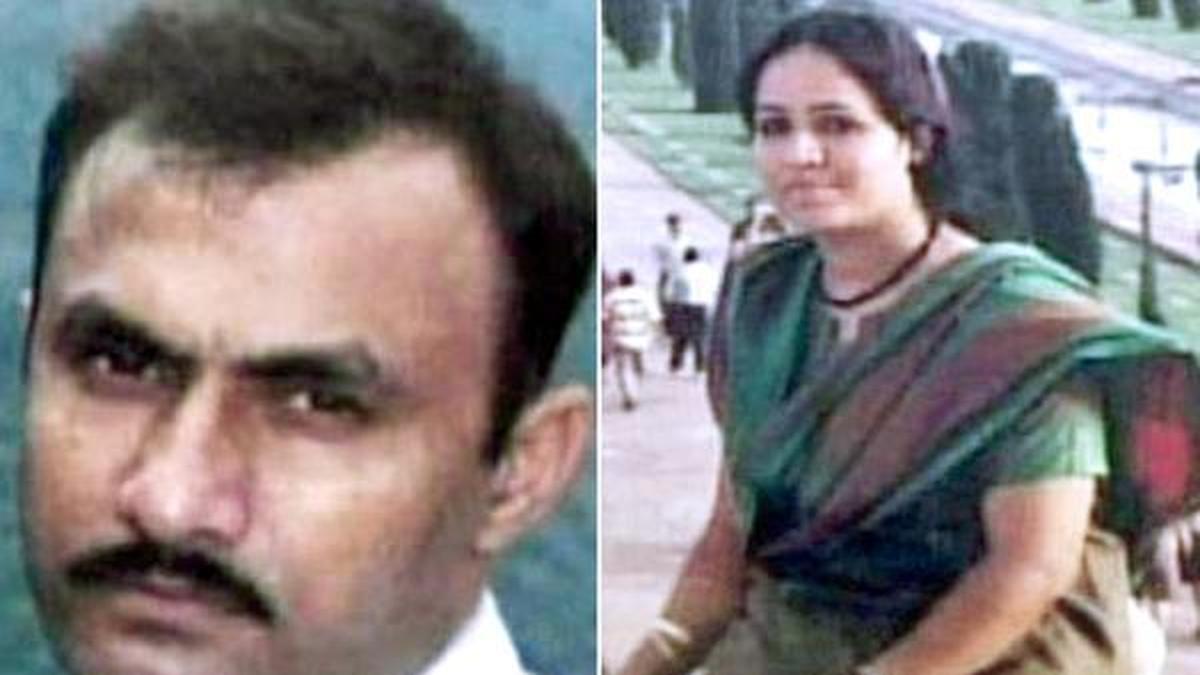
The case pertains to the alleged extrajudicial killing of Sohrabuddin Sheikh in November 2005, the disappearance of his wife Kausar Bi, and the subsequent death of Tulsiram Prajapati in December 2006. According to the prosecution, the three were abducted from a luxury bus near Zahirabad and later killed in staged encounters as part of a criminal conspiracy allegedly involving police officers and politicians.
The Bench noted that the prosecution examined 210 witnesses, of whom 92 turned hostile. “There is no ground to draw an inference that the trial was not conducted properly because 92 prosecution witnesses turned hostile,” the court said. It added that these witnesses, when cross-examined by the prosecution, denied having made any statement to the police in support of the prosecution case.
The court said that not a single witness identified the accused in the dock as the persons who had abducted Sohrabuddin Sheikh, Kausar Bi and Tulsiram Prajapati.
The Bench held that the prosecution failed to establish the offence of criminal conspiracy. “The essence of the offence of conspiracy is the fact of combination by agreement. There must be some evidence regarding physical manifestation of the agreement. Mere transmission of thought or sharing of a desire to commit an unlawful act is not sufficient,” the court said.
Referring to the discharge of 16 accused persons by the trial court on the same set of evidence, the Bench said that the decision had become final. “The very foundation of the prosecution case is demolished and the conspiracy theory must be held not proved,” it observed.
Postmortem report
The court recorded the testimony of Dharmesh Somabhai Patel, the doctor who conducted the postmortem on Sohrabuddin Sheikh. The doctor stated that no burn marks or smoke deposits were found on the body, which would ordinarily be present if a person was fired at close range. The postmortem report also noted that no cadaveric spasm was observed, which generally occurs when death is associated with extreme physical or emotional stress. “These findings clearly rule out any possibility of fake encounter of Sohrabuddin Sheikh,” the Bench said.
On the death of Tulsiram Prajapati, the court noted that the prosecution did not produce any witness who saw the murder.
Regarding Kausar Bi, the prosecution had claimed that she was burnt to death and her remains disposed in the Narmada river. The court observed that most witnesses produced to establish this did not support the prosecution case.
The investigating officer had stated before the trial court that there was no material to show that any of the accused received political or monetary benefit. The officer said that the police officers facing trial were acting under the instructions of their superiors, the Bench noted.
The court also referred to the testimony of the appellants, Rubabuddin and Nayamuddin Sheikh. Mr. Rubabuddin admitted in cross-examination that he had told an inquiry committee that a person named Kalimuddin, not Tulsiram Prajapati, was travelling with Sohrabuddin and Kausar Bi. Mr. Nayamuddin stated that his testimony was based on information given by Kalimuddin, who was not examined during the trial.
The Bench also set aside an interim application filed by Maniar Kalpesh Kumar seeking to challenge the discharge of Amit Anilchandra Shah, who was accused No. 16 in the case and had been discharged by the trial court on December 30, 2014.
The court noted that the applicant had suppressed the fact that the discharge order had been challenged earlier before the High Court and the Supreme Court, and that the Special Leave Petition was dismissed on August 1, 2016. The applicant did not state how he was connected to the case or why he had surfaced nearly two decades after the crime was registered. The court said the application appeared to have been filed with an oblique motive at the instance of a political adversary of the accused.
The Bench reiterated that a judgment of acquittal cannot be interfered with in a casual manner. “The High Court must take a holistic view and render its judgment keeping in mind the cardinal principle of criminal jurisprudence that there is presumption of innocence in favour of the accused. Such presumption continues at all stages of the trial and gets concretised when the trial ends in acquittal,” the court said.
It added that the power to reverse an acquittal should be exercised only in exceptional cases where the trial court’s view is perverse or based on an erroneous appreciation of evidence. Since the trial court had applied correct legal principles and its conclusions were not contrary to the evidence, the Bench found no ground to interfere.
Published – May 08, 2026 10:06 pm IST