Image source: FunTimes AI
It’s another ‘May Day’, International Workers Day. And just like every other one, the world pauses to celebrate labor, the engine of economies and the backbone of societies. It is a day meant to honor dignity in work, fair wages, and the rights of workers everywhere.
But in Africa, the question feels less like a celebration and more like a confrontation:
Who is actually working for African workers?
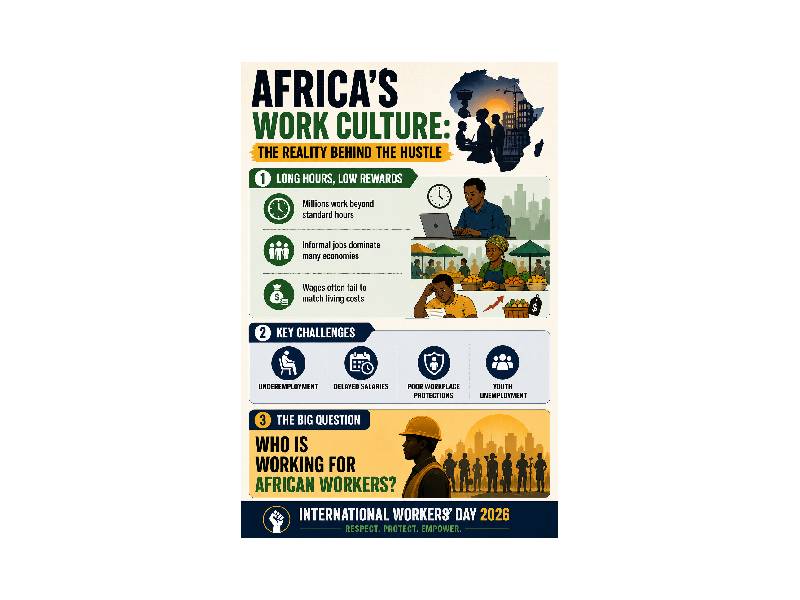
While Africa is often praised for its resilience, its energy, and relentless hustle, the truth is harder to romanticize. For millions across the continent, work is not a pathway to stability. It is a daily negotiation with survival. And in most of the famous African bustling cities, the story is strikingly similar. People are working, often tirelessly, but without the structure, protection, or reward that should come with it.
We call it hustle culture. We celebrate it. We even export it as a symbol of African determination. But beneath that narrative lies something more uncomfortable: hustle is often what fills the gap where systems have failed.
In many African countries, a significant portion of the workforce exists within the informal economy, without contracts, insurance, or safety nets. There is no guaranteed income, no clear career progression, and no real protection when things go wrong. Work exists, but security does not.
And even within the formal sector, the cracks are visible. Wages struggle to keep up with rising living costs. Job security is fragile. Work-life balance is more myth than reality. Burnout is common, but rarely acknowledged.
Young people, in particular, are caught in a frustrating loop. Education, once seen as the clearest path to opportunity, no longer guarantees stability. Degrees are earned, but jobs are scarce. And when work does come, it is often underpaid, unstable, or disconnected from long-term growth.
So the question persists: who is working for the workers?
Governments across the continent routinely mark May Day with speeches and symbolic gestures. Labor laws exist on paper. Policies are announced. But for many workers, these promises feel distant and detached from the realities of daily life.
Because real support for workers goes beyond recognition, it requires systems that function. It demands wages that reflect economic realities, protections that are enforced, and structures that allow people not just to work, but to progress.
Africa does not lack hard workers. If anything, it has an abundance of them. What it lacks, in many cases, are systems that match that effort with opportunity and dignity.
Resilience has become one of Africa’s most celebrated traits. But resilience, when over-relied upon, can become a quiet excuse for dysfunction. People should not have to struggle endlessly just to prove they are strong. Work is not supposed to be this hard.
As the world marks International Workers’ Day today, perhaps the focus should shift beyond celebrating workers, but questioning the systems around them. Because until work across Africa guarantees dignity, and not just survival, ‘May Day’ will remain less of a celebration, and more of a reminder of what is still missing.
Victoria Ezechukwu-Nwagwu is an Associate Editor at FunTimes Magazine with a strong background in media, strategic communications, and editorial leadership. She brings a thoughtful, detail-driven approach to storytelling, content development, and collaboration, ensuring high editorial standards.
She plays a key role in shaping impactful narratives and driving creative innovation across the publication.