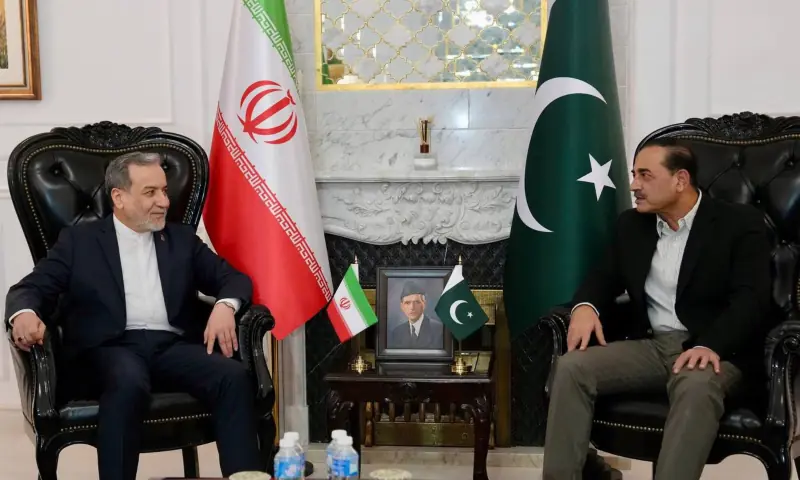
An Iranian delegation led by Foreign Minister Abbas Araghchi left Islamabad on Saturday after meeting with Prime Minister Shehbaz Sharif and Chief of Defence Forces (CDF) and army chief Field Marshal Asim Munir.
However, Iranian state media said Araghchi will head back to Pakistan after visiting Oman.
The IRNA news agency, citing the foreign ministry, reported that Araghchi “is scheduled to visit Pakistan again after completing his trip to Oman and before travelling to Russia”.
Part of his delegation had returned to Tehran, it added, “to consult and obtain the necessary instructions on issues related to ending the war, and is scheduled to rejoin Araghchi in Islamabad on Sunday night”.
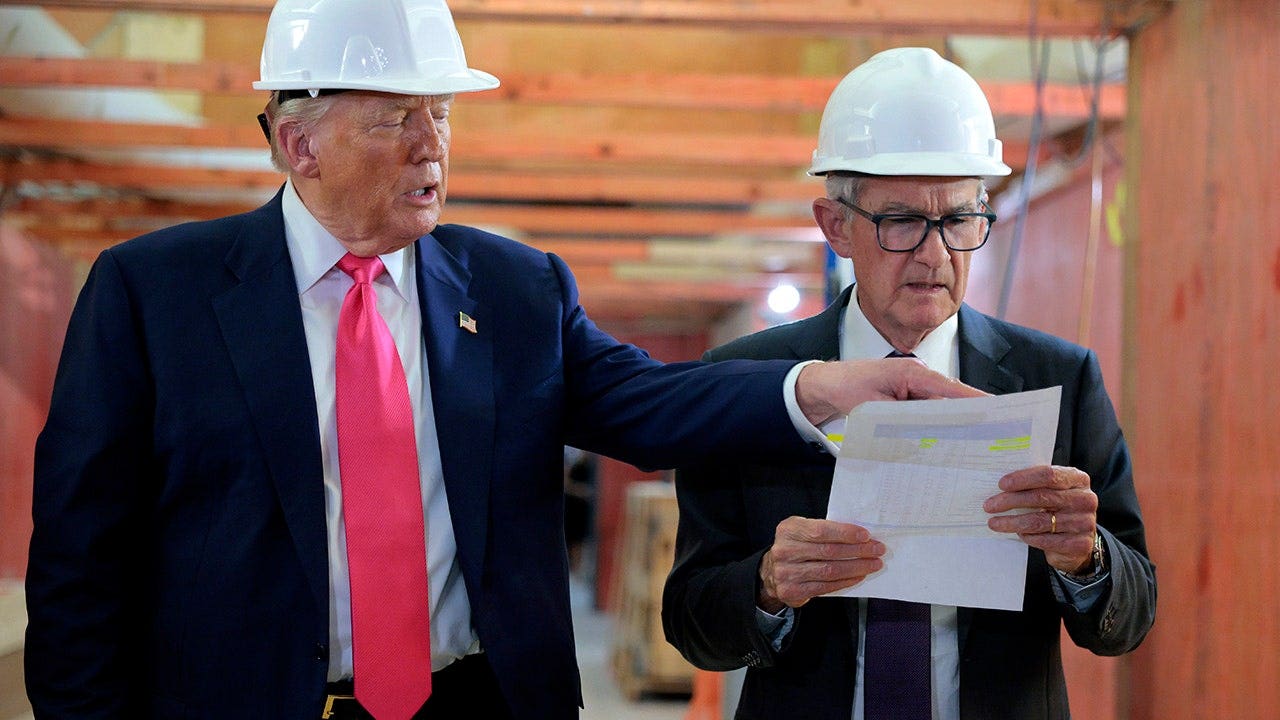
At the same time, US President Donald Trump cancelled the visit of US envoys Steve Witkoff and Jared Kushner, who were expected to depart for Pakistan later in the day for talks with Iran.
Araghchi’s meetings
The Iranian foreign minister termed his visit to Pakistan “very fruitful”. In a post on X, he said, “Very fruitful visit to Pakistan, whose good offices and brotherly efforts to bring back peace to our region we very much value.
“Shared Iran’s position concerning a workable framework to permanently end the war on Iran. Have yet to see if the US is truly serious about diplomacy,” he said.
A Pakistani source told Reuters that Araghchi delivered Tehran’s negotiating demands, as well as its reservations about US demands, to Pakistani officials.
Araqchi “explained our country’s principled positions regarding the latest developments related to the ceasefire and the complete end of the imposed war against Iran”, said a statement on the minister’s official Telegram account.
“Regional developments and bilateral ties came under discussion,” state-run Pakistan TV reported about Araghchi’s meeting with the premier.
CDF Munir, Deputy Prime Minister and Foreign Minister Ishaq Dar, and Iran’s Ambassador Reza Amiri Moghadam were also present during the meeting held at the Prime Minister’s House.
PM Shehbaz called the meeting a “most warm, cordial exchange of views on the current regional situation”.
“We also discussed matters of mutual interest, including the further strengthening of Pakistan–Iran bilateral relations,” he said.
Dar said that the meeting lasted “approximately two hours”.
“The prime minister emphasised on the importance of dialogue and diplomacy for peace and stability in the region and beyond,” he said.
Earlier in the day, Araghchi held a separate meeting with CDF Munir.
“Matters of mutual interest and the overall regional situation were discussed,” state-run Pakistan TV reported about the meeting.
Trump cancels US envoys’ visit
Hours after Araghchi departed the federal capital, the US president told Fox News he had cancelled a planned trip to Pakistan by envoys Jared Kushner and Steve Witkoff for peace talks with Iran.
“I’ve told my people a little while ago they were getting ready to leave, and I said, ‘Nope, you’re not making an 18-hour flight to go there. We have all the cards. They can call us anytime they want, but you’re not going to be making any more 18-hour flights to sit around talking about nothing,’” Fox News reported the president as saying in a phone call.
Asked whether the cancellation meant he would resume the war, Trump told Axios: “No. It doesn’t mean that. We haven’t thought about it yet.”
Subsequently, he posted on his Truth Social platform, reiterating that the visit had been cancelled.
“Too much time wasted on traveling, too much work! Besides which, there is tremendous infighting and confusion within their ‘leadership.’ Nobody knows who is in charge, including them. Also, we have all the cards, they have none! If they want to talk, all they have to do is call!!!”
Later, Trump told reporters in Florida that he decided to call off the visit because it involved too much travel and expense, and Iran’s latest peace offer was not good enough for him.
Before boarding Air Force One for a return flight to Washington, Trump said Iran had improved an offer to resolve the conflict after he cancelled the visit, “but not enough”.
“I think Pakistan is terrific and the field marshal is fantastic. I think the prime minister of Pakistan’s great, and they’d like to see something happen,” Trump told reporters.
“But we’re not going to be travelling 15, 16 hours to have a meeting with people that nobody’s ever heard of,” he said.
Pakistan’s diplomatic push
Araghchi arrived in Islamabad late on Friday as renewed diplomatic activity gathered pace. He was received by Deputy PM Dar and CDF Munir.
Ahead of the visit, he had held separate telephone conversations with Dar and CDF Munir, focusing on the ceasefire and the diplomatic track.
The visit comes at a delicate moment in the US-Iran standoff, with a fragile, indefinitely extended ceasefire holding on paper, while core disputes over the naval blockade, nuclear restrictions and sequencing of concessions remain unresolved.
“The purpose of my visits is to closely coordinate with our partners on bilateral matters and consult on regional developments. Our neighbours are our priority,” Araghchi said in a post on X before departing Tehran for his three-country tour, which also includes stops in Oman and Russia.
In his statement, Baqaei clarified, “No meeting is planned to take place between Iran and the US. Iran’s observations would be conveyed to Pakistan.”
He said Araghchi would meet with Pakistani “high-level officials in concert with their ongoing mediation and good offices for ending American-imposed war of aggression” and the restoration of peace in the region.
The first round of direct talks between the US and Iran was held in Islamabad on April 11 and 12, which ended after more than 20 hours without agreement but kept the diplomatic channel open.
Since then, exchanges have continued indirectly through Pakistan, with both sides calibrating positions while avoiding a formal breakdown.
The ceasefire, originally brokered around April 7 and 8, has been extended without a defined timeline, creating space for diplomacy but also prolonging uncertainty.
Officials in Islamabad described the situation as fluid, with mediation efforts focused on bridging the sequencing gap between US demands and Iranian preconditions.