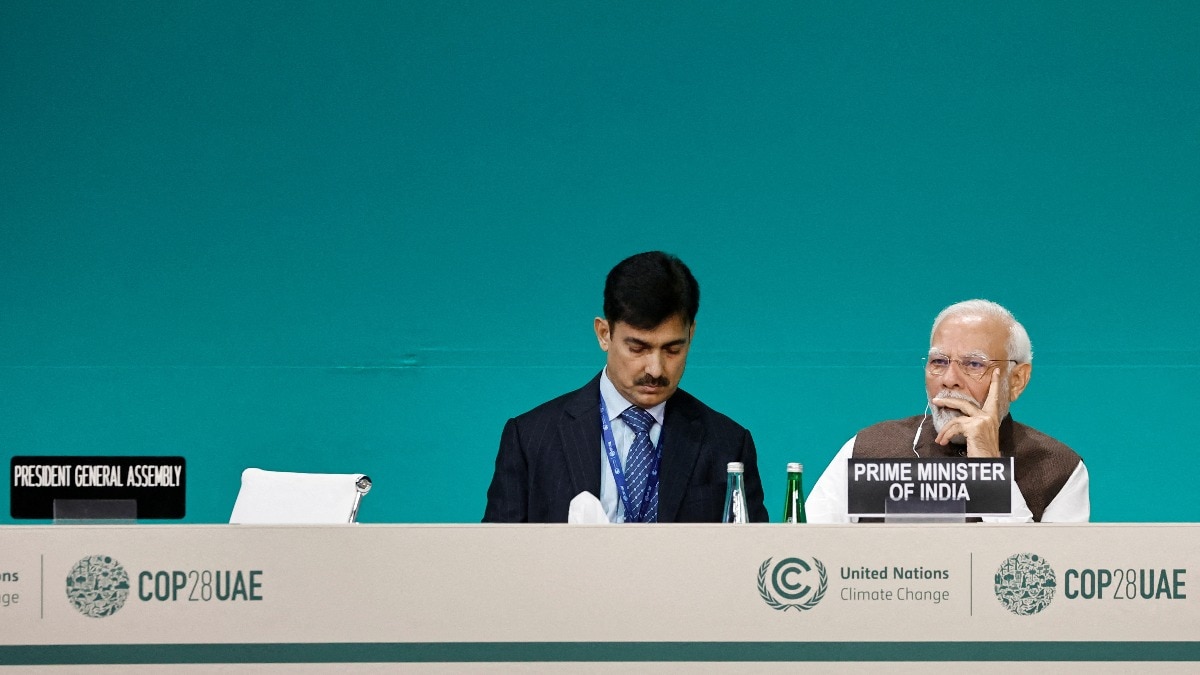
India on Friday confirmed it has withdrawn its bid to host the COP33 climate summit in 2028, but the reasons behind the surprise decision remain unclear, with the government offering only a broad explanation so far.
“Yes, India has withdrawn. We have taken several factors into account. But India remains fully committed to meeting its climate change commitments,” Ministry of External Affairs spokesperson Randhir Jaiswal said during a weekly briefing.
“We continue to build on our green agenda and, at the same time, see how we can best foster great climate change action worldwide with our international partners,” he added.
The move, however, has raised questions among climate observers, especially as no detailed justification has been made public. Jaiswal directed queries on specifics to the Ministry of Environment, Forest and Climate Change, which has yet to respond.
COP30 President Andre Correa do Lago attends the plenary session at COP30 in Brazil. (Photo: Reuters)
PROMISE MADE, PROMISE BROKEN
The withdrawal marks a sharp reversal from a high-profile pitch by Prime Minister Narendra Modi, who had proposed India’s candidature to host COP33 during the COP28 summit in Dubai in 2023.
The announcement had been widely viewed as an assertion of India’s leadership role in global climate negotiations, particularly as a voice of the Global South.
PM Narendra Modi is pictured delivering the national statement at COP28 in Dubai. (Photo: Reuters)
In July 2024, the Brics bloc – Brazil, Russia, India, China and South Africa – had backed India’s proposal, and a dedicated COP33 cell was later set up in 2025 to handle planning and logistics.
Back home, the Ministry of Environment, Forests and Climate Change had even established a dedicated COP33 Cell in July 2025 to manage the professional and logistical requirements of the summit.
Then, the plan collapsed.
During the briefing, Jaiswal asked journalists to seek specifics from the Ministry of Environment Forests and Climate Change. The Environment Ministry is yet to respond to the questions posed by IndiaToday.in.
WHY DOES IT MATTER?
The fallout from this decision goes beyond just losing an event. India’s decision to withdraw is expected to be a setback for climate action both domestically and globally, with deeper concerns now surfacing about India’s climate credibility.
Vendors use solar powered lights at an open air evening market, illustrating India’s green-energy efforts. (Photo: Reuters)
India had already missed two deadlines last year to submit its updated Nationally Determined Contribution (NDC) for 2035, placing it among 76 UNFCCC member nations that failed to meet the requirement, before finally announcing updated goals in March 2026.
PM Modi has also not attended the last two COP summits, sending ministers in his place.
The timing stings particularly hard given that India had used last year’s COP30 to openly criticise developed nations for failing to deliver on climate finance promises, emerging as a potential champion for developing economies on the climate frontline.
For a country that has made renewable energy a cornerstone of its global identity, walking away from the world’s biggest climate forum without so much as a press conference raises uncomfortable questions about where India’s climate ambitions truly stand.
– Ends
Published On:
Apr 17, 2026 17:32 IST