Image courtesy of Ron L
If you haven’t heard of Victor Harbor, one might say ‘you’ve been living under a rock.’
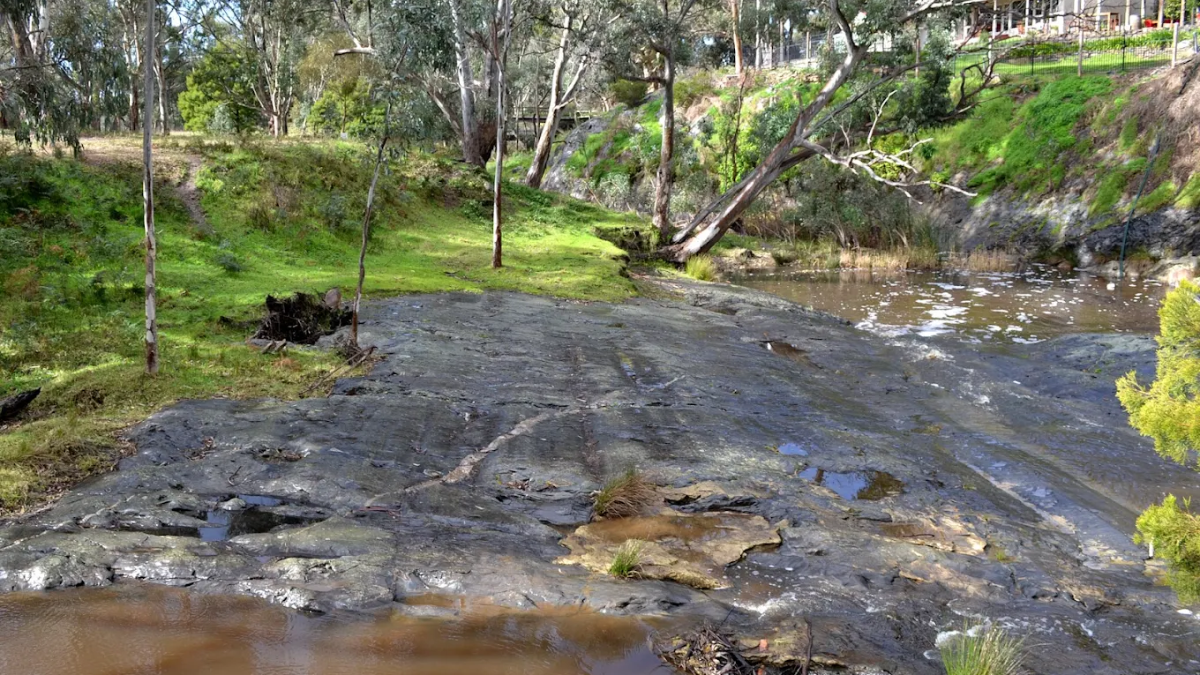
Funnily enough, just 14km away, hidden in the Inman Valley, lies one of the world’s largest and oldest glacial pavements, known as Glacier Rock or Selwyn’s Rock.
Around 280 million years ago, moving ice carved this glacial pavement into bedrock, leaving behind an extraordinary geological snapshot of the Permian Ice Age.
It is the largest of several glacial pavements found across the Fleurieu Peninsula and is recognised as one of the largest in the world. The grooves, scratches and distinctive crescent-shaped marks etched into the rock reveal the path of the ancient icecap, which moved from southeast to northwest through the area.
Local rock enthusiast and author of The Fleurieu Rocks, Rob Kirk, said the bedrock in the creek is Cambrian in age and was covered by massive glaciers in the Permian.
“Millions of tonnes of ice ground the grooves seen there as glaciers moved to the North West, when we were joined to Antarctica.”
“It is some of the best glacial features in Australia if not the southern hemisphere.”
The riverbank above Glacier Rock also tells part of the story, with boulders and rock debris left behind as the icecap melted, including granite believed to have travelled from Victor Harbor.
Glacier Rock was first recorded by European geologist A.R.C. Selwyn in 1859 while working for the South Australian Government, marking the first European-documented discovery of glaciation in Australia. It was later rediscovered in 1897 by renowned geologists Sir David Edgeworth and Dr Walter Howchin from Sydney and Adelaide universities.
The landmark isn’t the only thing drawing people to the area. Right above sits Belicious, a Belgian café known for its hot, fluffy and delicious Belgian waffles.
“The Belgian Belicious restaurant is above the glacial outcrop in the river and is a good refreshment stop after looking at rocks!”
The lovely beaches we have and the older, harder rocks seen at Carrickalinga, Lady Bay and Second Valley are because these cliffs were ground away by glaciers, Rob said.
“You can go and put your finger on the base of what were five kilometre high mountains near the Hobart Memorial,” he said. “Or find 500-million-year-old marine fossils on Myponga Beach.”
“Not to mention the megafauna bones found near Normanville – lots happening down there!”
It seems South Australia has a few more geological wonders than first meet the eye, but you’ll have to know where to look and get out from underneath a rock.
Today, Selwyn’s Rock continues to draw geologists from around the world, while offering visitors a rare chance to stand beside a piece of South Australia’s ancient history.
Selwyn’s Rock
Where: 1 Mount Alma Road, Inman Valley, Fleurieu Peninsula
For more information, click here.