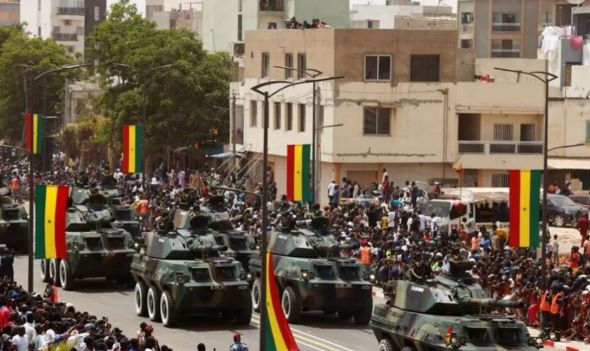
Source: TANTV
April in Dakar is a season of remembrance. As Senegal marks its 66th Independence Day on April 4, 2026, the capital’s streets brim with national pride. Military bands march in rhythm. Citizens gather draped in green, yellow, and red. Schoolchildren recite liberation poems. To see this day only as a holiday or ceremony is to miss its true weight. This celebration is a living link to a monumental achievement.
The story of Senegalese independence is one of the most intellectually rich and complex chapters in the history of African liberation. It was a movement fought in both the political arenas of Paris and Dakar, and in the realm of culture, poetry, and philosophy. Celebrating this day in 2026 is an act of historical preservation. It honors the specific men and women who navigated the crushing weight of French colonialism to build a modern state founded on the principles of Black dignity and self-determination.
The Complex Architecture of 1960
To grasp the magnitude of April 4, one must understand how deeply entrenched French colonial rule was in Senegal. Unlike other colonial projects that relied only on distant administration, France implemented a policy of assimilation. This was most prominent in the Four Communes: Dakar, Saint Louis, Gorée, and Rufisque. Residents of these urban centers were granted nominal rights as French citizens. This system created a highly educated and politically active Senegalese elite early in the twentieth century. In 1914, Blaise Diagne achieved a landmark victory by becoming the first Black African elected to the French parliament. This event established a long tradition of Senegalese leaders fighting for their rights within the halls of European power.
However, the illusion of equality under French assimilation was violently shattered in the decades that followed. The turning point for Senegalese national consciousness came during and immediately after the Second World War. Thousands of West African soldiers, known as the Tirailleurs Sénégalais, were conscripted to fight for the liberation of France from Nazi occupation. These men shed their blood on European soil under the promise of liberty, equality, and fraternity. When they returned home, they found the same oppressive colonial structures intact. In December 1944, French forces opened fire on a camp of mutinying West African veterans at Thiaroye, just outside Dakar. The veterans were simply demanding their rightful back pay. The Thiaroye massacre laid bare the fatal hypocrisy of the colonial state and accelerated the demand for absolute sovereignty.
By the late 1950s, the momentum for independence across the African continent was unstoppable. The political maneuvering that led directly to the creation of modern Senegal was intricate and fraught with tension. In 1958, French President Charles de Gaulle offered French African territories a stark choice. They could vote for immediate independence and face total abandonment by France, or they could vote to join a new French Community with limited autonomy. Under the pragmatic leadership of Léopold Sédar Senghor, Senegal chose the latter to avoid economic collapse.
But full independence could not be delayed for long. In early 1959, Senegal merged with the neighboring French Sudan to form the Mali Federation. It was under this federation’s banner that the formal agreement for the transfer of power from France was signed on April 4, 1960. The federation was short-lived. Ideological differences between Senghor and the Sudanese leader Modibo Keïta led to a tense political crisis. On August 20, 1960, Senegal officially withdrew from the federation and declared its independence as a republic. Yet, the Senegalese state chose to immortalize April 4 as its official Independence Day. According to the historical archives detailed by Britannica, this date remains the foundational marker of the moment the legal bonds of direct colonial subjugation were finally broken.
The Cultural Foundation of the First Republic
Senegal’s independence stands out for its philosophical roots. Its first president, Léopold Sédar Senghor, was not a general or traditional revolutionary, but a renowned poet and Black intellectual. Long before office, Senghor studied in Paris with Aimé Césaire and Léon Damas. Together, they created the philosophy of Negritude.
Source: Olympics.com
Negritude was a literary and ideological movement that sought to reclaim and celebrate the value of Black history, culture, and aesthetics in a world that had systemically degraded them. For Senghor, political independence was meaningless without cultural independence. He believed that the newly liberated African state must be built on the bedrock of its own civilizational values. The Stanford Encyclopedia of Philosophy notes that Negritude became the defining intellectual framework for Francophone African liberation.
When Senegal became independent in 1960, Senghor infused this philosophy directly into the machinery of the state. The government dedicated a massive percentage of its early national budget to the arts, education, and cultural preservation. Senghor wrote the national anthem himself. He envisioned Dakar as a global capital for Black intellectualism. This vision culminated in 1966 when Senegal hosted the First World Festival of Black Arts. The event brought together thousands of artists, writers, and musicians from across Africa and the Americas. Figures like Duke Ellington, Langston Hughes, and Josephine Baker traveled to Dakar to participate in a monumental celebration of global Black genius.
Celebrating Independence Day in Senegal today is, therefore, a reaffirmation of this cultural victory. It is a reminder that the architects of the Senegalese state did not just want to build roads and ministries. They wanted to fundamentally rewrite the global narrative about African humanity. They fought to ensure that newly independent Senegalese citizens would view their heritage with pride rather than shame. When modern citizens take to the streets on April 4, they are honoring a legacy that established their nation as a sanctuary for Black intellectual and artistic freedom.
A Shared Inheritance for the Diaspora
The history of Senegal’s liberation is not confined to West Africa’s geographic borders. It is a critical piece of the historical architecture that supports the global African diaspora. For African Americans, Senegal represents a dual site of unspeakable tragedy and extraordinary resilience.
Just off the coast of Dakar lies Gorée Island. For centuries, this small stretch of land served as a holding center for enslaved Africans before they were forced across the Atlantic Ocean. The island’s infamous House of Slaves and its Door of No Return stand as haunting physical evidence of the horrors of the transatlantic slave trade. The UNESCO World Heritage documentation recognizes the island as an unparalleled site of memory for the global diaspora.
Because of this deep historical wound, the rise of an independent, sovereign, and culturally proud Senegal in 1960 carried immense emotional weight for Black Americans engaged in their own struggle for civil rights. The images of a Black president commanding a modern state, writing poetry, and hosting global arts festivals provided a powerful counter-narrative to the brutal realities of Jim Crow segregation in the United States. The leaders of the American civil rights movement closely watched the wave of African independence. The liberation of countries like Senegal proved that the oppressive systems designed by European and American powers could indeed be dismantled.
Today, the relationship between Senegal and the diaspora remains deeply active. Thousands of African Americans travel to Dakar and Gorée Island every year to reconnect with a history that was violently interrupted. They participate in an ongoing cultural exchange that enriches both communities. When Senegal celebrates its independence, it also celebrates the survival and enduring spirit of all the descendants of those who were taken from its shores. The anniversary serves as a bridge across the Atlantic. It binds the modern political state to the descendants of its scattered people.
The 66th Independence Day of Senegal is a moment for deep reflection. Military parades and public speeches are the outward signs of internal resolve. This celebration matters because history can easily be lost if not actively preserved. By honoring the moment the colonial era ended, Senegal reasserts its right to exist on its own terms. The people of Senegal use this day to recall the sacrifices of the Tirailleurs Sénégalais and the political brilliance of their early leaders. They celebrate the enduring power of their cultural identity. In a world that demands assimilation, remembering the struggles of 1960 is an act of defiance and national preservation.
Anand Subramanian is a freelance photographer and content writer based out of Tamil Nadu, India. Having a background in Engineering always made him curious about life on the other side of the spectrum. He leapt forward towards the Photography life and never looked back. Specializing in Documentary and Portrait photography gave him an up-close and personal view into the complexities of human beings and those experiences helped him branch out from visual to words. Today he is mentoring passionate photographers and writing about the different dimensions of the art world.