The boss of Australian Energy Producers has joined an attack on “anti-fossil fuel activists” for dictating the nation’s energy policy and warned any windfall tax would lead to job losses.
Samantha McCulloch has used an address at a major gas conference in Sydney on Wednesday to condemn the “coordinated campaigns of disinformation” against drilling in Australia.
The energy chief joined the Minerals Council calls to ramp up more resource projects and in blaming green groups for hindering energy sovereignty.
Sign up to The Nightly’s newsletters.
Get the first look at the digital newspaper, curated daily stories and breaking headlines delivered to your inbox.
By continuing you agree to our Terms and Privacy Policy.
“Australia now has one of the largest trade deficits in refined petroleum products in the world, despite having abundant undeveloped oil reserves,” Ms McCulloch told the Australian Domestic Gas Outlook.
“Australia let the anti-fossil fuel activists win. We allowed our fuel security to be outsourced to the rest of the world, and now all Australians are paying a very high price.
“We cannot let extremism dictate Australia’s energy policy.”
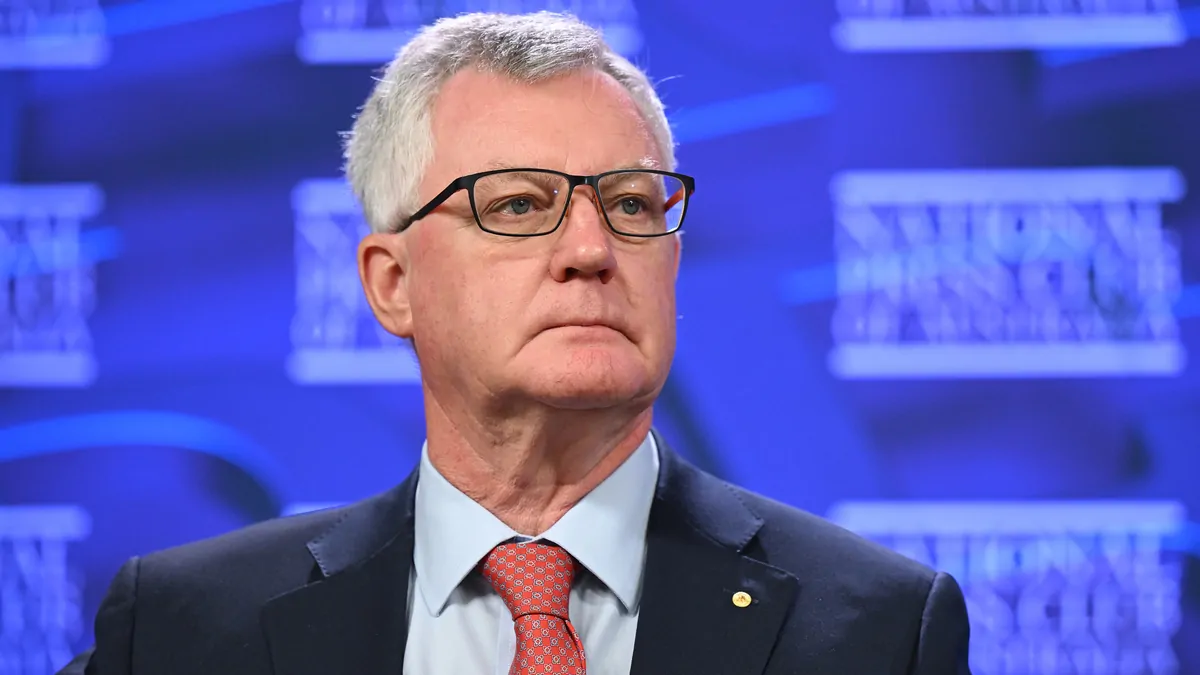
Australian Energy Producers’ Samantha McCulloch. Credit: Tom Huntley/The Australian
Both Ms McCulloch and MCA boss Tania Constable said the Iran war-induced crisis should be a “wake up call”.
Shadow resources minister Susan McDonald also spoke at the same gas conference and criticised the “chorus of ill-informed, anti-gas activists” for making new gas projects “hard” to get up and running.
Environmental groups on Wednesday rejected the industry’s attempt to scapegoat activists, while Labor argued Australia’s push for energy sovereignty should be driven by renewable investment.
Labor frontbencher Clare O’Neil said energy independence is an “absolute no-brainer” but maintained that renewable energy was the ideal path.
“I think one of the absolute no-brainers from what’s happening in Iran is the urgency of Australia to become energy independent,” she said.
“But I think one thing any politician surely would take away from the current context is we need to stand on our own two feet.
“The way that I see us doing that in the medium and longer term is through this massive endowment of renewables.
“Our government takes a really practical approach to these things. We don’t say only renewables as Australia’s future.
“We are obviously going to continue to need gas for some time, and that’s why you’ve seen the environment minister over time make good, rational decisions about areas that he sees are open for further exploration.
“Our government has opened up 15 new areas for exploration and extraction. These are not quick fixes, though. It takes some time to mine new sources of energy for our country.”
When pressed in Parliament if Labor would fast track oil and gas projects in Australia, Prime Minister Anthony Albanese insisted his government was working “faster and more efficiently”.
“When it comes to any approvals, they go through our environmental laws, which we approved last year without the support of those opposite so that what we can do is actually do things faster and more efficiently,” the PM said.
Conservation Council of WA executive director Matt Roberts was scathing of commentary by the sector and called Ms Constable’s blame of green groups as “desperate”.
He said taking aim at activists was “just a desperate attempt to paint everyday Australians as a villain” by a group propped up by a “membership of ideological fossil fuel companies and private interests”.
“Australia has been held over a barrel for far too long by industry groups like the Mineral Councils of Australia,” he said.
“It’s the dependence on fossil fuels that has gotten us into trouble and a diversified and decentralised energy is what is needed in the face of this global instability.
“This crisis is being an opportunity for people to put their agenda forward and it just feels like it’s more of that from the Mineral Council of Australia.”
Ms McCulloch also hit back at calls for a gas tax to capture profits made by Australia resource giants during the Middle East conflict.
It comes after reports earlier this month that the Albanese Government is considering a new levy on Australia’s gas and coal exports in the upcoming Federal Budget.
Reports have been welcomed by the Greens and Teal MPs, environmental groups, advocates and unions — many of which had previously called for a flat tax to be applied to gas exports prior to the Iran war.
Industry and Coalition figures have, however, warned a new gas tax would stifle investment and threaten jobs.
“But right now, we are seeing the same vested interests trying to stop new gas developments through well-funded and coordinated campaigns of disinformation and lawfare,” Ms McCulloch said.
“The relentless disinformation campaign that we’re seeing from The Australia Institute, the Greens and Teals in pushing for an additional 25 per cent tax on gas exports represents a major threat to Australia’s energy security.
“It is no coincidence that these groups also want to stop all new gas projects in Australia.
“It is right out of the Greens’ playbook: no more coal, oil and gas.”
Chamber of Minerals and Energy WA had also warned against a new gas tax.
CME chief Aaron Morey said Australia needed to learn lessons from the UK Energy Profits Levy introduced in May 2022, which the peak body claimed had “dangerous consequences” on hundreds of jobs.
Mr Morey said it was a “cautionary tale” after it had led to “capital and projects being deferred or redirected elsewhere” in the UK.
“In the midst of a global energy crunch, for Australia to go down the UK route would be an own goal of epic proportions. It would put us on a path to economic ineptitude,” he said.
When responding to questions about the domestic gas reservation scheme in Parliament on Wednesday, Energy Minister Chris Bowen said ensuring Australians had “first rights” to the nation’s resources was important.
“The gas that’s under our soil and our waters should be gas that the Australian people have first rights to when it comes to the needs of the industry and the Australian energy system,” he said.
Minister for Climate Change and Energy Chris Bowen. Credit: Martin Ollman NewsWire/NCA NewsWire
Mr Bowen had met with Singapore’s Energy Minister Tan See Leng in Canberra on Wednesday after the two nations signed an agreement to continue their exchange of refined fuels and LNG.
Foreign Minister Penny Wong also met with Dr Tan and said several ministers across portfolios were engaging with international partners to try to shield industries from the implications.
“Dr Tan and I discussed the critical importance of keeping trade flows open and supporting continued movement of essential supplies like LNG and diesel,” she said.
“We also discussed practical steps to strengthen energy supply resilience in our region, including better coordination and information sharing to respond to any disruptions.
“Australia and Singapore want to strengthen our collective energy resilience and accelerate work on arrangements that support the trade of essential supplies.”