How To
John Paul, AAA Northeast’s Car Doctor, hears from a reader whose 7-year-old car has begun to burn a lot of oil.
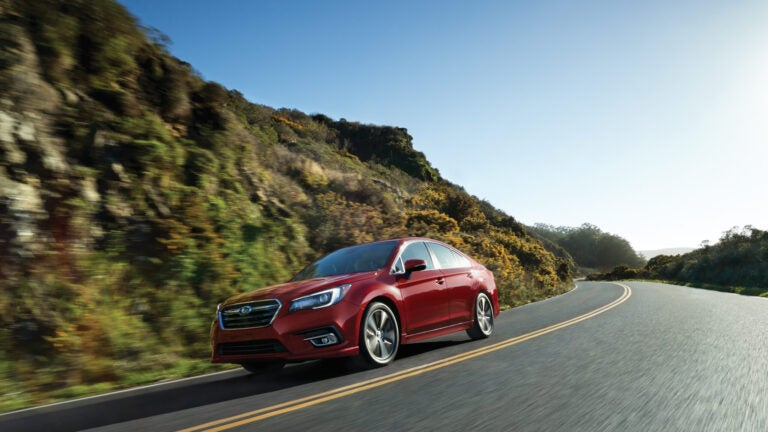
The Car Doctor hears from a reader whose 7-year-old car has begun to burn a lot of oil. Subaru
March 26, 2026
4 minutes to read
Q. I currently have a 2019 Subaru Legacy with around 89,000 miles. I’ve primarily had it serviced by Subaru during the recommended intervals. After noticing it burning a lot of oil, I spoke to Subaru and they performed an oil consumption test, which revealed it is consuming too much. Most recently I have had to add four quarts since my last oil change (not all at once). They recommended replacing the short block, with a price figure of around $4,000. Given the price point, I am a little hesitant to spend that much on a “we think it’s this” problem. In your experience, would you agree with them that a new short block is needed, or should I be looking at something else? Just to clarify, the car is burning, not leaking any oil.
A. Some Subaru engines can have an issue with the oil control piston rings sticking and causing excessive oil use. Sometimes using an engine flush and performing multiple oil changes can help. I would also check the PCV system. A faulty PCV can cause oil consumption. Certainly, a new engine will solve the issue. Considering the prices on new and late model used cars, this expensive repair could be a worthwhile investment on an otherwise healthy seven-year-old Subaru.
Q. A friend of mine took her 2017 Toyota Camry with a V-6 engine to her mechanic because it was making a strange noise. They said the water pump needed to be replaced and quoted her a price of $670. Is that average? I looked up the cost of the actual water pump, and it is about $125 plus labor. She trusts her mechanic, but I think it is always good to get a second opinion.
A. The price can vary based on labor rates. Today we are seeing labor rates from $100 to $265 per hour. When I calculated the price based on $165 per hour I came up with a price of over $700. The V-6 engine takes nearly four hours to replace the water pump. The $670 quoted price, although expensive, is very reasonable.
Q. I hope I am not being too pushy, but I am hoping you can respond quickly to this. I am facing a choice between a Hyundai Kona with the 1.6L or 2.0L engines. I will be leasing and probably will not keep the car after three years. I will be driving locally with short highway trips with some longer trips as the weather gets better. The other difference between the two is the 2.0-liter engine comes in a light gray vehicle with light gray seats, while the 1.6-liter powered engine comes in a green with dark interior (my preference). I greatly appreciate your input on this.
A. The 2.0-liter Kona is a normally aspirated engine which makes 147 horsepower. The 1.6L is a turbo charged engine that makes 190 horsepower. The 2.0L car is focused more on fuel efficiency, getting, according to published reports, three more miles per gallon on average. The 1.6-liter powered Kona will give a bit of a sportier feel. Also the 1.6 liter uses an 8-speed automatic transmission where the 2.0 uses a CVT (not my favorite). The turbo charged engine is less forgiving if you do not keep up with maintenance. All in all the 1.6L turbocharged version would be my choice because it is a little more engaging to drive. Readers, if I do not respond to emails within 24 hours, email me again. Don’t worry, you are not being pushy.
Q. I enjoy watching racing in person and on television. As a car guy, first do you like racing, and do you have a favorite type?
A. I am not a big racing fan, but what I enjoy is talking with drivers and mechanics. I find the behind the scenes fascinating, everything from technology to the transport trucks. The “electricity” in the air at the races is what I enjoy. Also the telemetry on some race cars is amazing. The tech folks can see not just engine characteristics but how often brakes are applied, suspension movement, tire temperature, and the driver input. If I had to pick a favorite racing it would be drag racing. Perhaps because of the cars and drivers and maybe because I have been told I have adult ADD and the races end in four seconds.
Q. Sometimes the engine in my car hesitates to start. The car is a Hyundai Genesis Coupe V6-engine. You can hear the starter turning over, it slowly sputters and finally turns over. What is wrong?
A. I would start with a check of the basics. This includes testing the battery, battery cables and connections, and the starter. From your description I suspect a failing battery or poor electrical connection.
Q. My car will drive fine then will randomly shake as if someone is rocking the car. When I slow down the car smooths out for miles and will randomly shake again. Shaking feels like it is coming from the rear of the cars more than the front. Any thoughts? Most people I ask just tell me to buy new tires.
A. I would start with a thorough inspection of the suspension, looking for worn bushings and other suspension parts. Typically worn or damaged tires will cause a consistent and repeatable shake. Would I check the tires, yes, checking tires/wheels is part of a good suspension inspection.
John Paul is AAA Northeast’s Car Doctor. He has over 40 years of experience in the automotive business and is an ASE-certified master technician. E-mail your Car Doctor question to [email protected]. Listen to the Car Doctor podcast at johnfpaul.podbean.com.
Sign up for the Today newsletter
Get everything you need to know to start your day, delivered right to your inbox every morning.