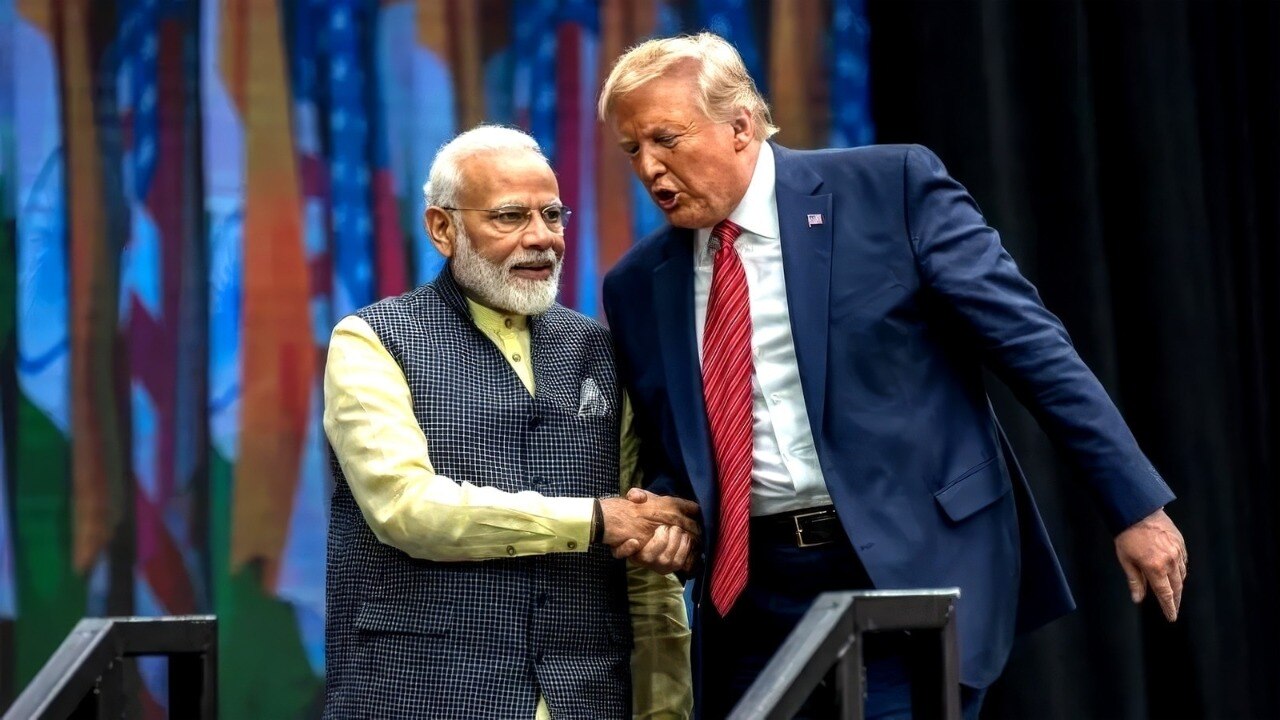
Nearly four weeks into the Iran war, US President Donald Trump called up Prime Minister Narendra Modi on Tuesday. A day before, Secretary of State Marco Rubio spoke with External Affairs Minister S. Jaishankar. At the same time, the US Under Secretary of War is on a visit to India. The flurry of the US’s engagements with India has raised a question. Why now? There is a Pakistan angle to it.
Read Full Story
Trump’s sudden call to PM Modi and the outreach to India have been interpreted by geopolitical experts as a damage-control exercise. The timing is critical, coming at a time when Pakistan has emerged as the US’s mediator of choice with Iran to end the conflict. In fact, Islamabad may host top US officials for negotiations with Iran soon. The optics of it are bound to cause unease in New Delhi. The US is well aware of that.
WHAT TRUMP-MODI SPOKE ON IRAN?
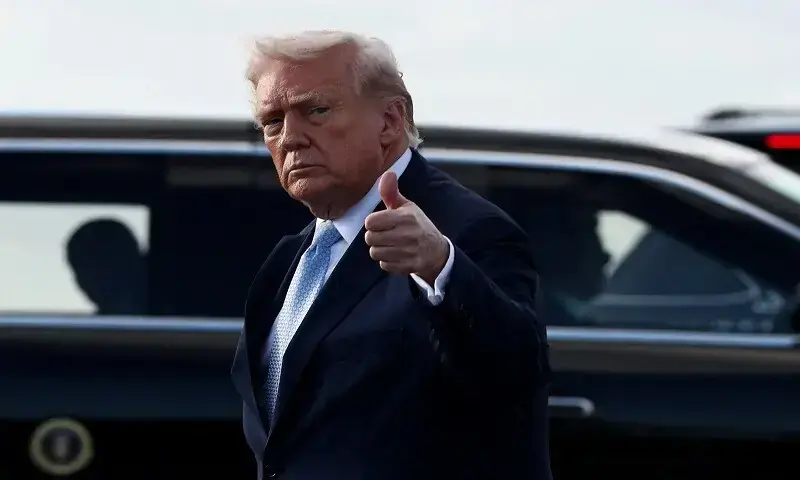
US Ambassador Sergio Gor, who has been key in getting Washington-Delhi ties back on track after a brief strain, told a media house that Trump wanted to keep PM Modi “in the loop” over the latest developments. Crucially, the call came a day after Trump paused for five days his threat of striking Iran’s power plants and claimed the US was holding “productive” talks with Iran.
The news of the Trump-Modi call, the first since the war and the second this year, was first disclosed by Gor. “They discussed the ongoing situation in the Middle East, including the importance of keeping the Strait of Hormuz open,” Gor said.
Around 20% of the world’s oil and gas passes through the Strait of Hormuz. The war has not only severely reduced shipments through the critical chokepoint, but has sent global oil prices soaring.
India, which imports 90% of its energy needs, has borne the brunt of the economic fallout. While Iran has allowed a handful of Indian oil and LPG tankers to pass the strait, it has not stopped triggering a cooking gas crisis in the country. Thus, India is both a stakeholder and a victim, as underlined by geopolitical expert Brahma Chellaney.
Thus, understandably, ways to keep Hormuz open were the topic of discussion between Trump and PM Modi. It also must not be forgotten that India enjoys close strategic ties with Iran, and several rounds of talks have been held with Tehran’s president and foreign minister.
“India supports de-escalation and restoration of peace at the earliest. Ensuring that the Strait of Hormuz remains open, secure and accessible is essential for the whole world,” PM Modi tweeted.
INDIA’S BALANCING ACT AMID IRAN WAR
The messaging is crucial. Amid the Iran war, India has pursued a delicate diplomatic balancing act and has not taken sides. At the same time, India has cultivated parallel relationships with Iran, the Gulf, Israel, and the US.
The Modi government has prioritised the protection of its energy security and its diaspora in the Middle East. In fact, India has been in touch with almost all the countries in the Middle East, including Iran and the Gulf Cooperation Council (GCC).
Through this, India has refused to let any one partnership become a trap.
But it is not that India has not engaged in diplomacy to bridge the gap. India and a coalition of countries like Egypt and Oman have quietly worked behind the scenes to bridge the gap between the US and Iran, according to a report in Bloomberg.
While there was no post from Trump on his conversation with Modi, Gor, without divulging the finer details, said it was a “very important phone call”. A close aide of Trump, Gor, also praised PM Modi’s “understanding of the situation”.
“PM Modi is a vital part of the global puzzle… President Trump always welcomes PM Modi’s involvement,” he told News18.
The language is widely seen as the US’s move to reassure New Delhi of its strategic importance at a time when Pakistan seems to be emerging as a potential mediator to oversee negotiations between the US and Iran.
Over 2,000 people have died amid the conflict in the Middle East (AP)
WHY TRUMP SUDDENLY CALLED PM MODI?
On Tuesday, Pakistani Prime Minister Shehbaz Sharif said Islamabad was “ready” to be the host to facilitate talks. Later, Trump shared Sharif’s post.
“This explains Trump’s phone call. The language of keeping India ‘in the loop’ is just reassurance — a way to soften the blow… Trump tried to make sure Modi doesn’t take it personally,” Chellaney tweeted.
Even the US Under Secretary of War, Elbridge Colby, praised India as an “essential partner” in the region in his address to a gathering in Delhi on Tuesday.
The Trump-Modi call came as the government faced flak from the opposition for allegedly ceding diplomatic space to Pakistan.
“While Modi was busy lauding himself at home, Pakistan was positioning itself at the diplomatic table during a critical global moment,” Congress spokesperson Pawan Khera tweeted. Leader of the Opposition Rahul Gandhi and Rajya Sabha MP Jairam Ramesh also castigated PM Modi’s foreign policy.
BEHIND PAKISTAN’S DIPLOMACY
However, behind Pakistan’s urgency to broker peace lies strategic compulsions and its own self-interests — a bid to reshape its image abroad and emerge as a reliable diplomatic power in the Gulf.
The easy explanation behind Pakistan being likely chosen by the US to carry its message is its geography. Pakistan borders Iran. It also hosts the second-largest Shia population after Iran.
However, the key fact is it doesn’t want to get dragged into a never-ending war in the Middle East, courtesy of its “attack on one, attack on both” NATO-style defence pact with Saudi Arabia. Islamabad is already engaged in a bloody border conflict with the Taliban in Afghanistan.
Thus, against this backdrop, Trump’s call to Modi takes on a different meaning. With ties on an upswing, the US is careful not to upset India, which it views as a crucial counterbalance to China in the region.
– Ends
Published By:
Abhishek De
Published On:
Mar 25, 2026 15:25 IST
Tune In