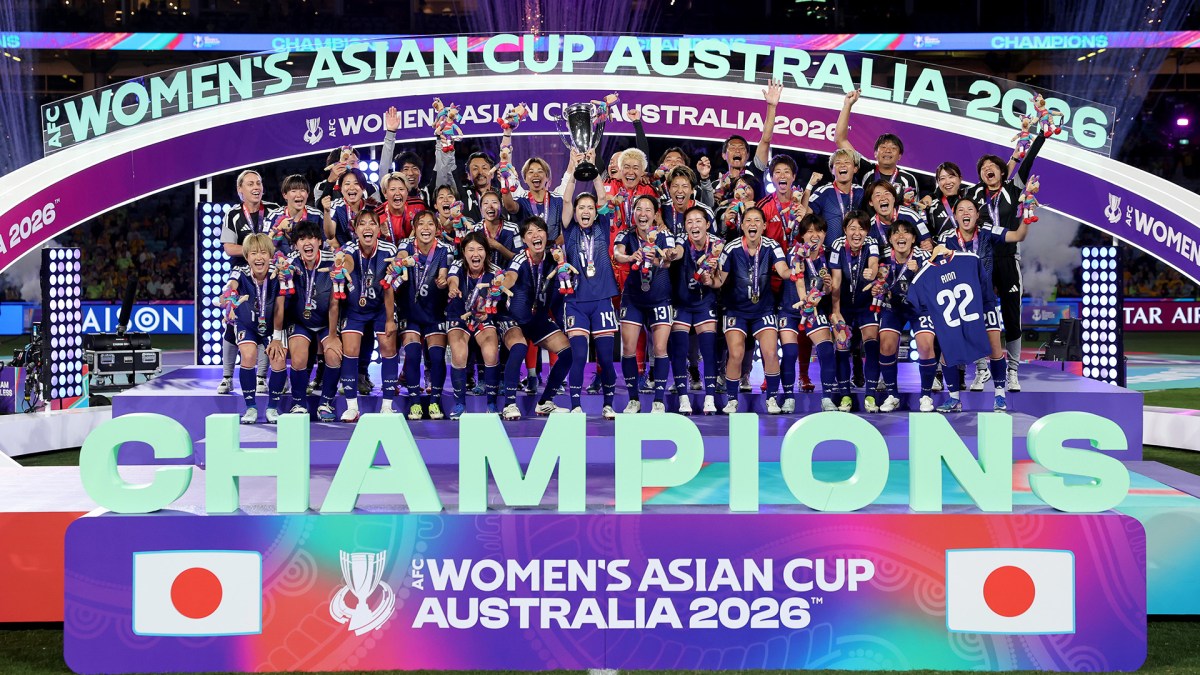
SYDNEY — Japan are the Queens of Asia once more after defeating a gallant Matildas 1-0 at Stadium Australia on Saturday evening. But the pre-tournament favourites were forced to dig deep and hold out, as the host nation launched a veritable green-and-gold onslaught throughout the second stanza.
Though pegged by most as the underdogs coming into the contest, the Matildas started the game on the front foot and produced two clear sights on goal across the opening 15 minutes; Kerr forcing Ayaka Yamashita into a save 90 seconds into the contest and Mary Fowler teeing up Caitlin Foord for an open shot she sent straight at the keeper in the 11th minute. But this promising start was dashed in the 17th frame when Yui Hasegawa found Maika Hamano in a pocket of space outside the penalty area, enough room for the 21-year-old to turn and, before she could be enveloped by Alanna Kennedy and Kyra Cooney-Cross, float a magnificent shot beyond Mackenzie Arnold and inside the far post.
Nonetheless, the Australians refused to be kowtowed by this deficit and pressed for a leveller, creating a series of unsuccessful chances for Foord as the half progressed. Riko Ueki should have put the game to bed when she headed wide in the 53rd minute or sent a shot straight at Arnold after being played through by Hamano in the 56th, but her attempts gave way to a period of further Matildas dominance. Alanna Kennedy rose in the 89th minute to direct a header on goal, only to be denied by a diving Yamashita save.
Propelled by the cacophonic noise of an almost entirely green-and-gold 74,397 fans in the stands, the Matildas continued to lay siege to Japan’s goal as time continued to elapse, but an equaliser to send the game to extra time proved heartbreakingly absent: Japan surviving an almighty scare to claim the silverware.
– As it happened: Japan crowned the queens of Asia, defeat Matildas
– Filipinas beat Uzbekistan to secure spot at 2027 Women’s World Cup
– North Korea seal long-awaited Women’s World Cup return
Japan claim continental glory after triumphing in its first real test
Throughout this entire tournament, we were waiting for Japan to finally be really tested. They dispatched their Group C foes with casual ease before then breezing past Chinese Taipei and South Korea in the knockout stages. Were they just that good, or did they still have something to prove? Just how good is this Nadeshiko Japan side, really?
Well, Nils Nielsen’s side was finally pushed all the way to the edge in the final (probably a little bit beyond it, honestly), but found a way to dig deep, hold out, and claim the prize they had come for: winning their third Asian Cup crown and third in the last four iterations of the continental showpiece.
In another universe, this was a game where Australia’s women could very well have emerged triumphant. On the balance of play, this was a game they should have won; they certainly created enough chances to manifest that reality into this one (more on that in a bit). They proved more press resistant than any opponent that Japan had yet played. They put their bodies into their foes early and often, breaking up the surgical rhythm their rivals had demonstrated throughout the tournament. When they were able to shift field position quickly and work Kerr, Foord, and Fowler into one-on-one contests, they looked a genuine chance to score. As they threw themselves forward with everything they had in search of an equaliser, the side in blue was forced as deep as they possibly could have gone.
But Japan found a way to weather that storm. Just as winning as beautifuly as they have been is a talent, so too is finding a way to win ugly, to smash-and-grab and break the hearts of tens of thousands of people willing your defeat. They absorbed the blows that their foes threw at them and responded with a Hamano haymaker. And they became Asian Cup champions as a result.
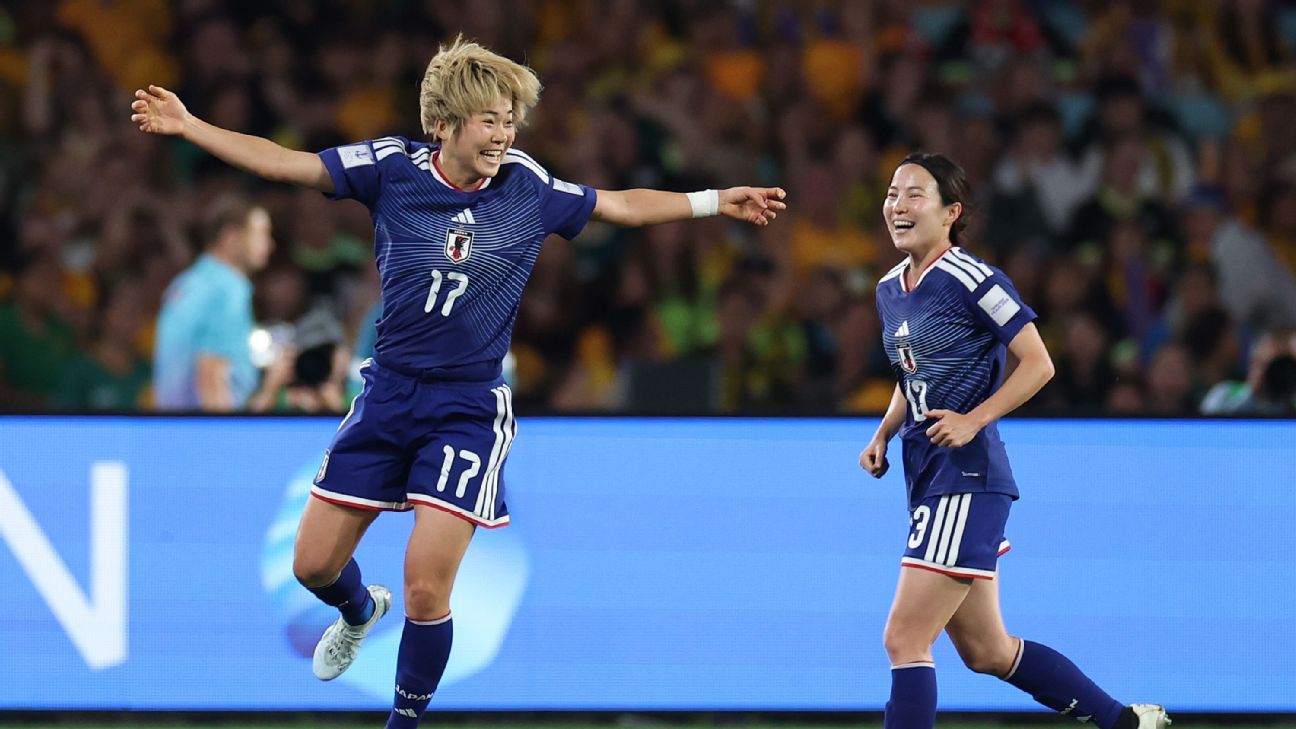
Maika Hamano’s incredible goal was a worthy tournament winner. Cameron Spencer/Getty Images
How good was Hamano’s goal?
In terms of game-winners, Maika Hamano’s effort is the kind you dream about. There was simply nothing Mackenzie Arnold or the Matildas could do about it.
Japan have scored so many beautiful goals across the three weeks of this tournament, in fact they recorded 29 goals in six games and conceded only once. And Hamano’s may well be the pick of the bunch. Not just for the occasion and what it achieved, but the execution.
Yui Hasegawa pokes the ball into the path of Hamano who is able to turn and shoot, finding the gap between the defender she’s just lost and the defender attempting to shut her down.
From just outside the box, it launches beyond an outstretched Arnold and nestles into the far post.
If you’re going to lose a major tournament final — an option no one wants to live but someone must always live — there are worse ways to be defeated.
Lack of clinical finishing comes back to haunt the Matildas
Coming into the game, most analyses suggested that if the Matildas were going to stage what would have been considered an upset, they’d need to prove clinical in front of goal. It wasn’t an unfair expectation, either, given that their ability to make their moments matter had proven the difference in their wins over North Korea and China on the road to the final.
But the cruel vicissitudes of football are many, and on Saturday evening, the lethal finishing that has defined the side’s run to the final vanished at the hour that needed it most. Kerr and Foord’s early chances, if they go in, completely change the trajectory of the game. If the Arsenal star converts one of her chances following Hamano’s pearler, the uncertainty that had crept into Japan’s game likely ratchets up another gear. If Torpey converts her 67th-minute volley, the noise from Stadium Australia probably would have been audible in Tokyo. If one of the multitude of moves forward they mount in the dying embers of the game produces an equaliser, they almost certainly ride that momentum to a famous victory. Instead, Yamashita’s goal led a charmed life.
Certainly, Japan had their near-misses, too. If tournament Golden Boot winner Riko Ueki scores with either of her chances in the 53rd and 56th minutes, the game is probably killed off there and then – but given how the game played out, how they took it to a previously imperious Japan and had them reeling at times, these missed opportunities will undoubtedly haunt the side and its fans for a while to come.
STAY IN THE KNOW WITH ESPN
Stay across all the big sports news — sign up to our weekly newsletters here!
SUBSCRIBE
Where to next for the Matildas?
The Matildas have captured the hearts and minds of Australia through their rise and introduced a new generation of supporters to the magic of football. And Saturday, perhaps even moreso than the World Cup semifinal against England, given the balance of play, they introduced this new family into one of the most hated, yet inescapable, emotions of being a football fan. Absolute heartache.
The Matildas put in a performance that against any other opponent would have seen them crowned Asian champions. Instead, they’ll return to their clubs with another runners-up medal. And the wait, the agonising wait, for this Golden Generation to lift a trophy together will go on. This will hurt, this will sting. As Carpenter observed pregame, the members of this squad will likely never get a chance to play another major final on home soil again. Given how long they’ve been together, this Women’s Asian Cup probably represented their last real chance as a unit to win a major tournament together. Their legacy will remain beyond reproach, legends of the game Down Under. But there will be no silverware with it.
But after Saturday, the tears of the fans in the stands, even if not mirrored on the faces of the Matildas, will be reflected in their spirit. With most of the squad’s core on the wrong side of 30, just how many will be there next year at the Women’s World Cup, either as a starter or a part of the squad, remains an open question. You’d think every one of them will be given the chance to earn their way there by Montemurro, as they have thoroughly earned it, but eventually the painful process of squad renewal will become even more encompassing. And this night in Sydney will become all the more painful.
Ecstasy for Japan but heartbreak for Australia, after the Women’s Asian Cup final. Saeed Khan / AFP via Getty Images
Nadeshiko Japan bring 2027 Women’s World Cup into focus
The Women’s World Cup is still well over a year away but the way in which Japan has played throughout this tournament has brought it into sharp focus.
The prospect of watching this Nadeshiko team play this kind of football against the best teams in the world is a tantalising prospect for all football fans.
Perhaps the most compelling part isn’t the way in which they dispatched lesser teams in the group stage, or even the ease with which they surpassed the likes of the Philippines and South Korea in the knockouts.
And make no mistake, it’s beautiful football that’s going to be worth the price of admission.
But by defeating the Matildas the way they did, they showed they have the defensive capabilities to go deep in an international tournament.
They threw their bodies into every block, they read the play well, and matched a truly desperate Matildas side.
In short, they can attack with the best of them and defend as doggedly as anyone.
The most exciting part of this Japan side? The age of some of their stars. The goal scorer in this final, Hamano, is only 21. The tournament’s golden boot winner, Riko Ueki, is 26. Aoba Fujino is 22. They’re not just ready for now, they’re ready for the future.
This style of football has bested Asia’s elite, one after the other. The question of whether it can stand up to international probing is incredibly exciting.