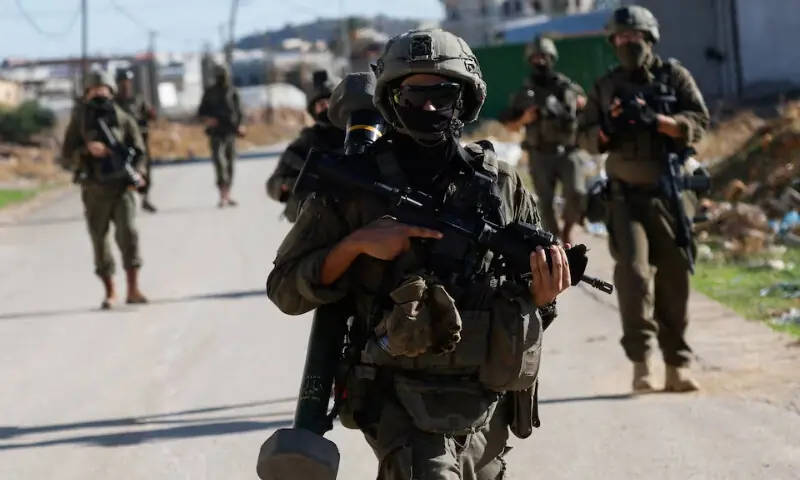
Bombs are exploding in Iran and the Middle East, but the fallout is rattling households and businesses in neighbourhoods all over the globe.
In Kansas, homebuyers saw 30-year mortgage rates edge above 6 per cent this week. In western India, families mourning the death of a loved one discovered that gas-fired crematories had been temporarily closed.
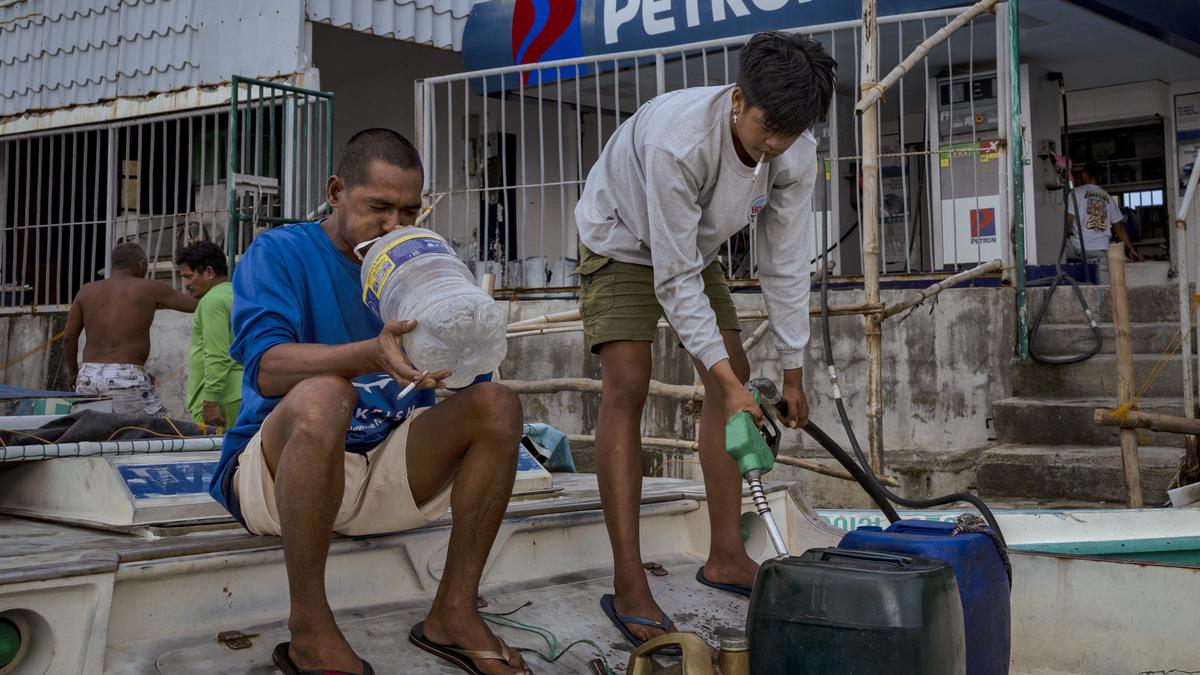
In Hanoi, Vietnam, gas station owners posted “sold out” signs. In Kenya, tea growers and traders worried their exports to Iran would rot on the dock. And across the United States, Canada, Europe, Britain and Mexico, farmers blanched at the surge in fertiliser costs.
Sign up to The Nightly’s newsletters.
Get the first look at the digital newspaper, curated daily stories and breaking headlines delivered to your inbox.
By continuing you agree to our Terms and Privacy Policy.
The widening war in Iran has delivered a stunning punch to a worldwide economy that has already been walloped by a breakdown of the international trading order, war in Ukraine and President Donald Trump’s chaotic policymaking.
“This really is the big one,” David Goldwyn, a former US diplomat and US Energy Department official, said of the shutdown of the Strait of Hormuz, the world’s most important choke point for oil. This is the emergency scenario everyone feared, he said.
Cargo deliveries have been stranded, shipping charges have increased and insurance premiums have skyrocketed. Yes, the price of gas at the pump is affected. But so is the price of food, medicine, aeroplane tickets, electricity, cooking oil, semiconductors and more.
A drawn-out war between the United States and Iran could have “catastrophic consequences” for the world’s oil market and the global economy, Amin Nasser, the CEO of Saudi Aramco, the world’s largest oil and gas company, warned this week.
Yet even if the war, which began February 28 when the United States and Israel struck Iran, wraps up relatively quickly, this latest upheaval is sending consumers, workers and employers on another unnerving and unpredictable ride.
It’s not just that small business owners and corporate executives must once again reevaluate their supply chains, manage additional price increases and track shifting restrictions on who they can do business with. Or that the added uncertainty undermines confidence, making consumers reluctant to spend and businesses reluctant to invest.
It’s that this remapping of power dynamics in the Middle East could set off a string of consequences whose full force might not be known for months or years.
Meg Jacobs, the author of Panic at the Pump: The Energy Crisis and The Transformation of American Politics in the 1970s, pointed out that prices didn’t immediately go back down after the oil embargo in 1973 and 1974. They remained high for the rest of the decade.
The supply situation is completely different today, with many more producers, Jacobs emphasised. But the crisis that the Organisation of Arab Petroleum Exporting Countries created with its embargo set off a chain of events that these oil producers never envisioned.
The oil shock prompted other countries, most significantly the United States, to conserve energy and develop fuel-efficient cars and their own oil and natural gas industries. Ultimately, the Arab countries’ monopolistic stranglehold was broken. Oil prices ended up collapsing in 1986.
Aral petrol station near Inning, Germany. Credit: Sean Gallup/Getty Images
Today’s actions in Iran and the surrounding region may similarly have consequences that are both unexpected and far-reaching.
Jacobs, for example, pointed to the likelihood of an emboldened and strengthened Russian president, Vladimir Putin.
This week Mr Trump eased some of the restrictions on Russian oil exports that had been imposed to pressure Mr Putin over the war in Ukraine.
Higher oil prices will boost Russia’s beleaguered economy and war machine. And Mr Putin has taken the opportunity to taunt European leaders who supported sanctions on Russian energy after the invasion of Ukraine.
Europeans only recently dug out of their deep dependency on Russian gas and oil. For them, the timing of this energy squeeze could hardly be worse. Producers, still reeling from the impact of the tariffs, must now contend with higher energy costs. That will be a blow to countries like Germany with large, energy-hungry chemical, pharmaceutical and auto industries.
Asian economies are even more exposed. They, too, are dependent on energy imports. In addition, poor and middle-income countries are subject to the vagaries of currency exchange rates. And when the dollar or euro strengthens, all their imports suddenly become more expensive.
Central bankers around the world face a difficult combination of circumstances. The United States has a stronger economy than many other countries. Nonetheless, its Federal Reserve confronts the same questions that are confounding other central bankers. Does the central bank raise interest rates to head off a revival of inflation as energy prices spike, or lower rates as labour markets are weakening and growth is slowing?
Elevated rates will also keep borrowing costs high at a time when rich and poor countries are facing record levels of debt.
That means more money that might have been used for health care, roads, housing or education instead will go to interest payments on debt.
Carsten Brzeski, an economist at the Dutch bank ING, noted that tech companies, especially those specialising in artificial intelligence, are highly sensitive to interest rate changes.
A small handful of these companies have been the main drivers of growth in the US economy — not to mention lofty stock valuations. “It could lead to the sharp correction in stock markets,” he said.