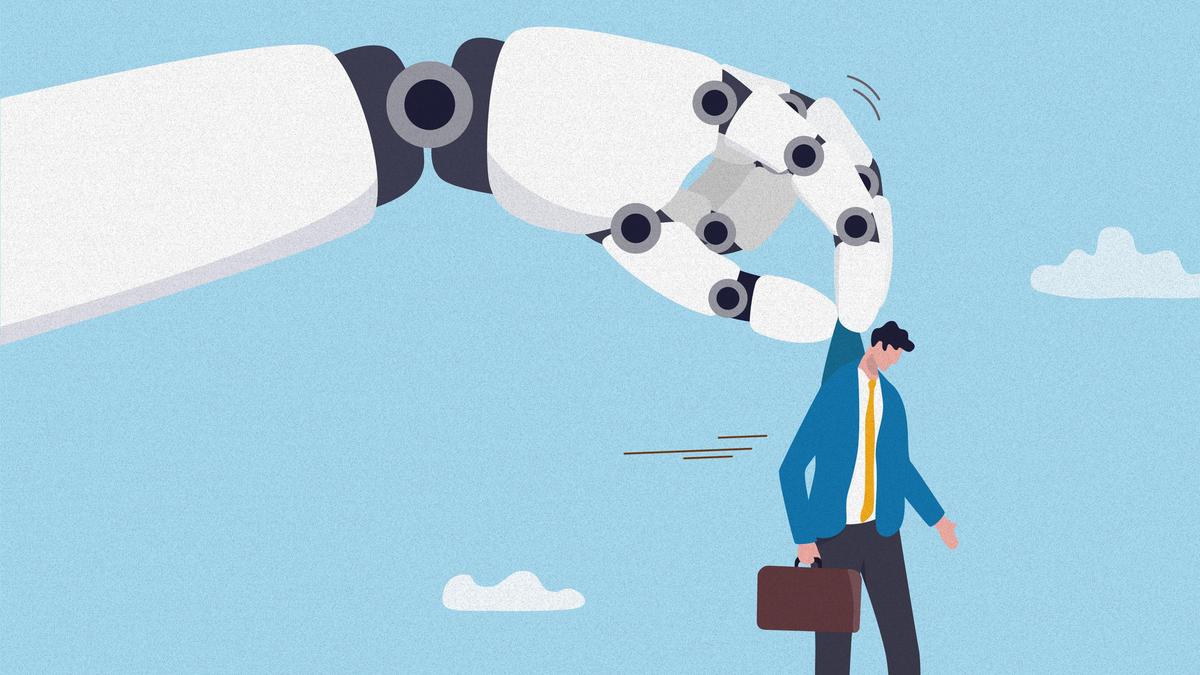
The tech sector dream is crashing down before its workers’ eyes after Atlassian became the space’s latest employer to announce huge job cuts, on Thursday.
Just a year or two ago, tech was the hottest to place to work for smart, young university graduates. It offered huge salaries, growth, T-shirts, jeans, bean bags, and table tennis in a workplace culture that shunned the stiffness of traditional corporate workplaces.
Tech companies consistently ranked as the best places to work, ahead on collaboration, satisfaction, wellbeing, purpose, and remuneration linked to business success.
Sign up to The Nightly’s newsletters.
Get the first look at the digital newspaper, curated daily stories and breaking headlines delivered to your inbox.
By continuing you agree to our Terms and Privacy Policy.
Now though, advances in AI mean the core software coding skills of tech graduates are all but redundant. What once made these knowledge workers valuable. is gone, and they’re losing their jobs.
AI programs like Anthropic’s Claude can code software platforms, or apps, faster and better than humans for virtually no cost.
In February, Zubin Appoo, the chief executive of ASX-listed software platform WiseTech spelt this permanent change out.
“The era of manually writing code as a core act of engineering is over,” he told investors, as part of an announcement that included news of 2000 job cuts, equal to 40 per cent of its workforce.
On February 27, Block, the owner of homegrown buy-now-pay later company Afterpay, flagged 4000 job losses across software engineering and other roles that can be replaced by AI.
Knowledge, service economy jobs under threat
The worse news for tech workers is that it’s certain there’s more job losses to come in a scenario that should also set alarm bells ringing for the government. AI has, without a doubt, come for the software sector. But where in the knowledge economy, will it prompt job losses take jobs next?
Law, journalism, accounting, banking, investment, education, marketing, advertising, travel services, or public relations, the list is infinite for potential disruption.
Every task, across every role, in white collar Australia, is likely to be assisted, redesigned, or replaced by AI within years.
The unknown is whether AI will replace more new jobs than it creates in an advanced services economy.
Today, the tech largely just automates tasks and creates deliverables based on vast data sets. But in the future, it may be able to acquire knowledge at a faster rate than humans in universities and tech labs, to invent new industries and jobs.
But for now there’s little evidence it will and talk of governments’ welfare bills soaring as the jobless rate goes from 4 per cent, to 10 per cent, and 15 per cent, does not seem preposterous.
AI and capitalism
There’s also no doubt some of the job cuts in the tech sector are in response to tumbling share prices and investor demands that companies manage costs more in line with a new reality.
Atlassian stock is down 66 per cent in 12 months and WiseTech down 46 per cent. If companies don’t search for efficiencies from AI they’ll be punished by investors, according to Deloitte.
“Today, 34 per cent of companies are starting to use AI to deeply transform their businesses, 30 per cent are redesigning key processes around AI and the remaining 37 per cent are only using AI at a surface level with little or no change to underlying business processes,” the consultancy said earlier this year.
And the AI-linked job cuts are already expanding from tech to sectors like banking where share prices remain robust.
Note that AI workers don’t need sick leave. They don’t need holiday pay, or lunch breaks. They’re not governed by Fair Work or DEI regulations. They also don’t moan about their managers, or join a union. In other words, AI’s free labour is very attractive to corporates in an economy that’s all about the accumulation of capital and profit.
Worrisome future
So far, there’s little pushback from society, customers, workers’ unions, politicians, or the traditional and social media about the downsides of AI.
Its free labour model may destroy the unions like private sector management teams or liberal politicians failed to. Or it may galvanise the unions into seeking more legal workplace rights and protections.
And it’s not just people losing their jobs to AI that may soon cause resentment. If AI can replace art and music it won’t be popular, with social interactions, creative, intellectual, and artistic impulses all being chipped away at by the new technologists.
In a commercial sense, AI’s algorithms have also long been used by Silicon Valley’s mega-cap tech businesses to modify human desires and guide the behaviour of billions of daily social media users on behalf of advertisers.
Consultants Gartner predict spending on AI infrastructure will hit $US2.5 trillion ($3.5t) in 2026 under the control of Wall Street, Silicon Valley, and the US government as its ultimate drivers.
So with so little incentive to slow the AI race and such powerful bodies driving it at an accelerating pace, the future is more uncertain then ever.