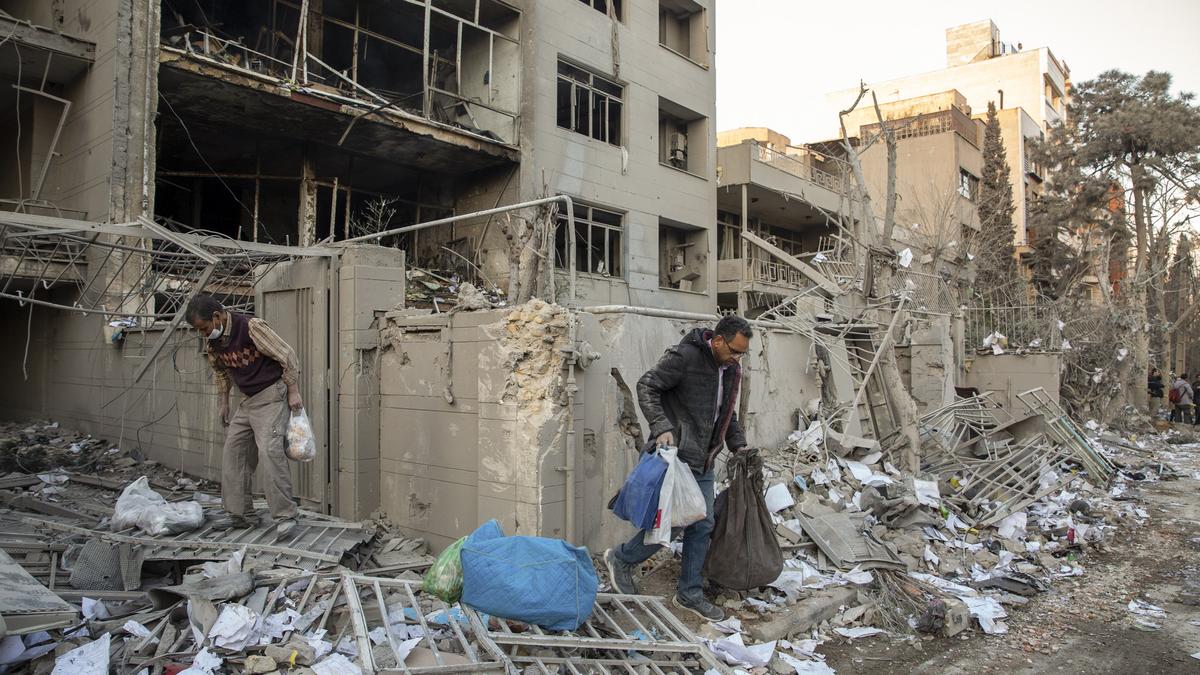
Rows of apartment buildings near collapse. Block after block littered with mangled metal, shards of glass and shreds of paper. A hospital room with its windows blown out, bricks and debris covering the bed.
These were the scenes in Tehran on Monday as the United States and Israel pressed their assault on Iran, as described by residents and captured by videos and images. And after three days of bombardment, the assault seemed only to be intensifying, residents of the capital said.
Late in the day, the Israeli military issued an urgent evacuation order to people in the neighbourhood of the notorious Evin prison, where political dissidents are jailed. “Your presence in this area will endanger your life,” the military warned.
Sign up to The Nightly’s newsletters.
Get the first look at the digital newspaper, curated daily stories and breaking headlines delivered to your inbox.
By continuing you agree to our Terms and Privacy Policy.
Shortly afterwards, Tehran residents reported thunderous explosions shaking their city.
The airstrikes targeted state television offices on Vali Asr Street, near the historic former seat of parliament in downtown, and other parts of the capital, according to official media reports and residents.
On one social media site, residents of Tehran could be heard speaking live in a town hall when the sound of fighter jets, booms and screams interrupted.
“Tonight, the attacks are even more massive”, one Tehran resident, Kamran, said in a text message to a New York Times reporter.
“It feels like bunker bombs or something — explosion after explosion.” Like other Iranians interviewed, he asked that his full name not be used, citing fears for his safety.
The Iranian capital is known for its bustling energy and lively cafe culture and endless traffic jams, but Monday was quiet, six Tehran residents and a photographer who toured the city said in interviews. Grocery stores were closed, as were pharmacies and most other shops. Roads and highways were empty.
Many Tehran residents had left town, seeking safety in the mountains and in the northern part of the country along the Caspian Sea coast. But some could not get out — or had nowhere to go to.
Residents in interviews and on social media described scenes of mayhem and panic, of families grabbing belongings, stuffing them into plastic bags, and fleeing bombed neighbourhoods.
Danger, some said, seemed to lurk in every direction. And while the streets of the capital were eerily empty of cars, the roads leading out of it were clogged with traffic, they said.
Security forces and intelligence agents have taken positions all across Tehran at checkpoints to stop and search cars and passers-by, witnesses said.
“The attacks were very close to us last night and this morning,” Yasaman, a 40-year-old photographer, said in a telephone interview. “I haven’t slept for four nights.”
How many people in the capital have been killed is unclear, but across the county, at least 555 are dead, Iran’s Red Crescent Society said Monday. Among them were at least 175 people, many of them children, reported killed when their school in southern Iran was hit.
Like many cities, Tehran, a sprawling metropolis of more than 10 million people, is densely populated and does not separate commercial, government and military zones from residential areas.
That leaves civilians especially vulnerable as the United States and Israel expand their target list from missile and nuclear facilities to government structures, state broadcasting offices and security and police headquarters.
“The hardest hits are yet to come from the US military,” Secretary of State Marco Rubio said Monday.
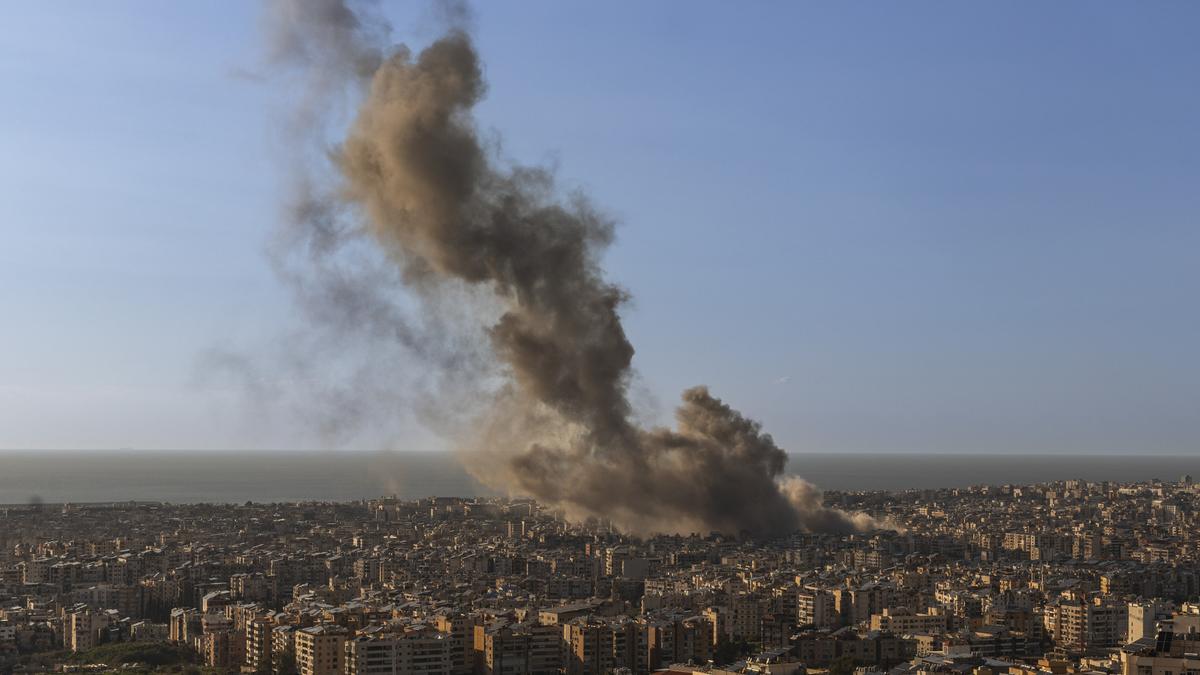
Already, massive plumes of smoke rising from multiple locations, day and night, have become part of the city’s skyline.
“Tehran is a city that is completely intertwined,” Nasim, a resident of the capital, said in a telephone interview. “In one block you can have a school, a police station, a hospital and all around it residential apartment buildings.”
On Sunday night, Mina, a 61-year-old engineer, was watching television in her living room on upscale Jordan Avenue in northern Tehran when an office building three doors away from her home was struck, she said. The force of the explosion blew out her windows and doors, as well as the windows of every building and house on her block, she said.
Mina said she had no idea why the building near her was targeted.
“The attacks are very near, the sounds are massive, pray we make it through the night,” Mina said in a voice message.
Nasim, too, witnessed a massive explosion Sunday evening, in her case as she was standing next to the window, she said. The blast, which set off a huge red ball of fire and smoke, shook her building and cracked the wall of her living room.
“I thought our apartment would collapse,” she said. “It was terrifying.”
That strike targeted a state television channel’s telecommunication tower, which was across the street from Gandhi Hospital. The private hospital, known for its fertility treatments, sustained significant damage and had to evacuate patients, including babies in incubators, Iran’s Ministry of Health and hospital officials said.
“We have newborn babies,” said the hospital president, Dr. Mohammad Hassan Bani Assad, in an interview published in Iranian media. “We had eight patients in the ICU, two in critical condition. Women giving birth. Embryos in our fertility department.”
The war is unfolding against the backdrop of a society already deeply traumatised from the government’s brutal suppression of anti-government protesters in January in which at least 7,000 people were killed, according to rights groups.
The protests were set off by Iran’s economy, which has been in tatters because of US sanctions, corruption and mismanagement. Inflation is about 60 per cent, according to Iranian state media reports.
Now there is a new threat.
“Ordinary people are getting hurt,” said Ehsan, a 36-year-old scientist. “Even if they don’t get killed or injured, when you lose your home or your business it’s very hard to recover in these economic times.”
One of the oldest structures in Tehran, Golestan Palace, sustained significant damage to its famed hall of mirrors and its symmetric Persian garden.
The palace, a UNESCO heritage site that dates to 1404, survived wars, invasion, coups and revolutions. But it was damaged by strikes at a nearby police station, according to Iranian media reports.
“If the sustained bombing damages historic landmarks, cultural sites and residential buildings, the war will be viewed by Iranians as not only an assault on military and nuclear sites but on Iran’s civilisation and people itself, it’s history, identity, and cultural memory,” said Omid Memarian, an Iran expert with DAWN, a Washington-based think tank.
© 2026 The New York Times Company