The endless outrage over Emerald Fennell’s Wuthering Heights has reached the point where you want to walk straight onto the moors and howl into the wind.
Apparently, Heathcliff should have been played by a black actor, and Cathy should be a teenager. The film, anonymous social media critics say, is nothing like the book. And how, apparently, can two Australians portray Victorian English characters?
Sign up to The Nightly’s newsletters.
Get the first look at the digital newspaper, curated daily stories and breaking headlines delivered to your inbox.
By continuing you agree to our Terms and Privacy Policy.
One look at social media and it’s like criticising the film has become a competitive sport. Everyone suddenly fancies themselves as not only a literary expert but the personal guardian of Emily Brontë’s legacy.
The irony is that much of this outrage is unfolding between clips of people sobbing in the cinema. Already, the film has made more than US$150 million worldwide at the box office.
For a film supposedly so offensive and with so many so-called errors, audiences cannot stay away from watching the tortured Heathcliff and Cathy.
Published in 1847, Brontë wrote a novel that is dark and nothing like a conventional romance. Heathcliff is an orphan, described only as a gypsy, dark and unwanted.
His race is never defined, and his past is never explained.
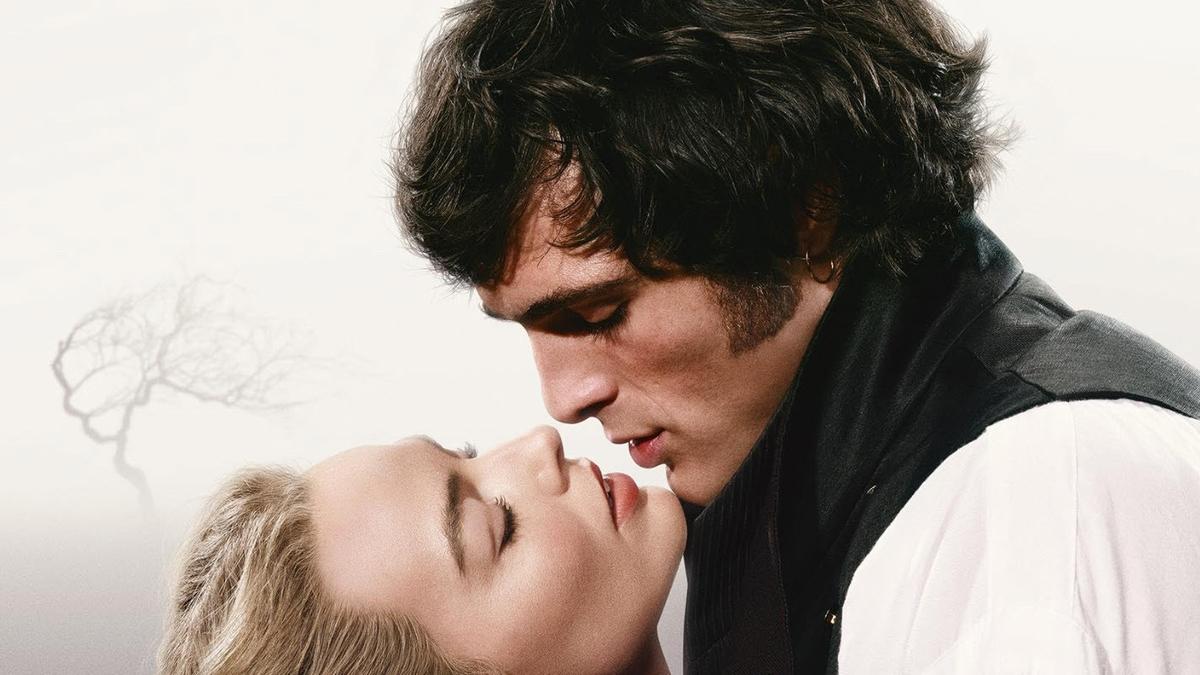
In Emerald Fennell’s adaptation, Heathcliff is played by Jacob Elordi, the Brisbane-born actor who has, in a few short years, gone from suburban Queensland to securing Hollywood’s most coveted roles.
Elordi plays Heathcliff as seductive, but there is danger there, too. Real anger. When he returns after years away, you notice the gold tooth first. Then the earring. Then the short jet-black hair.
He is not safe. He is not polite. He is not trying to be liked. He is Heathcliff. And the audience loves him.
What fascinates me is the selective nature of the outrage, especially from gen Z. In the film, Nelly Dean is played by an Asian actor. Edgar Linton is portrayed by an actor of Indian heritage. Both depart from the text, yet neither has provoked anything like the fury directed at Heathcliff’s portrayal.
Which suggests this is not really about literary purity at all. It is all about signalling.
The loudest complaint, inevitably, is that the film is “nothing like the book”. This is usually delivered with the smug certainty of someone who believes they are intellectually better than you.
But this argument collapses as soon as you examine it. The film was never meant to be like the book. It is an adaptation.
If films were required to replicate novels exactly, there would be no point in making them.
Wuthering Heights. Jacob Elordi and Margo Robbie star in Wuthering Heights. Credit: Warner Bros
Interestingly, when British filmmaker Andrea Arnold directed her own adaptation of Wuthering Heights in 2011, she cast a black actor as Heathcliff and was criticised for that too.
Then, the argument was that she had distorted Brontë’s intent. Now, the argument is that Fennell has not gone far enough. Heathcliff, it seems, is permanently trapped between competing demands to be both authentic and symbolic.
What makes this debate particularly absurd is that audiences are responding exactly as Brontë intended. They are leaving the cinema in tears. They are disturbed. They are moved. They are arguing.
This was never a comfortable story. Heathcliff and Cathy were never supposed to be role models. Their love is not noble. It is obsessive, destructive and corrosive. It ruins lives. It ruins generations.
Fennell’s film is visually extraordinary. Windswept moors, galloping horses and shadowy faces. It is raw, sensual and emotional. The performances are magnetic, particularly Elordi, who carries the film with a quiet, dangerous intensity.
There is also something subversive about Heathcliff being played by an Australian. Not an Oxbridge graduate or theatre royalty, but a boy from suburban Brisbane whose father painted houses.
The real betrayal of Wuthering Heights would not be changing it; it would be embalming it by turning it into a museum piece, admired but no longer felt.
Wuthering Heights. Credit: Warner Bros
Brontë wrote a novel that scandalised Victorian readers because it refused to conform. And nearly 180 years later, the story still refuses to conform to people’s views of what Wuthering Heights should look like.
The reaction to Fennell’s film says more about us than it does about her.
And you only need to glance at social media to see it. Strong opinions, delivered instantly and with total certainty. Outrage gets attention. Calm reflection does not.
It is easier to signal virtue than to admit you were moved (if you actually go and watch the movie rather than base your opinion on a few clips on social media).
But audiences are not stupid. They recognise the power of a great film when they see it.
And if a film can still provoke argument, tears and discomfort nearly two centuries after the book was written, then it has not betrayed Brontë’s spirit at all. It has honoured it.