As the only Asian team to lift the FIFA Women’s World Cup, expectations will always be lofty when it comes to Japan competing on the continental stage.
That is even before considering that, since 1986, they have not finished outside the final four at the AFC Women’s Asian Cup in 15 consecutive editions — claiming back-to-back crowns in 2014 and 2018.
Perhaps the only surprise is that it took Nadeshiko until 2014 to win their first Asian crown, having tasted what it was like to be world champions three years prior.
Japan’s dominance of the Women’s Asian Cup was realistically going to come to an end at some point, but a semifinal exit at the 2022 tournament in India was still a great disappointment.
After all, they had — on paper, at least — arguably the strongest squad assembled, alongside Australia, with an ideal blend of seasoned campaigners including Mana Iwabuchi and Saki Kumagai, as well as rising stars in Fūka Nagano and Hinata Miyazawa.
The Japanese were denied the chance to feature in a third straight decider only on penalties. The shootout would not have been required were it not for a dramatic 119th-minute equaliser that would keep China alive in the semifinals before they ultimately claimed a record-extending ninth title.
– Ten players to watch at the 2026 AFC Women’s Asian Cup
– Why the Philippines can create history at the Women’s Asian Cup
– Women’s Asian Cup 2026: Fixtures, results — all you need to know
Yet, after the letdown of not getting to the final, righting those wrongs will definitely be on the minds of Nadeshiko as the 2026 edition of the Women’s Asian Cup gets underway on March 1.
Once again, they are brimming with talent.
Back in 2022, despite their undeniable quality, only five of their 23-player squad were based abroad, and Nagano and Miyazawa had only a handful of caps to their names.
The two now play for Liverpool and Manchester United respectively yet make up just a fraction of Japan’s overseas-based contingent; now, only a quartet of their 26-player squad for the 2026 Women’s Asian Cup still ply their trade domestically.
Yui Hasegawa is rated among the best midfielders in the world and was named Manchester City’s Player of the Year last season, while the late-blooming Kiko Seike has thrived since finally earning a move to Europe at the age of 27 — becoming the first player in English Women’s Super League history to score a hat-trick on debut when she made an immediate impression after joining Brighton & Hove Albion.
Follow the Women’s Asian Cup YOUR WAY
Follow the nations and players you love, ignore the ones you don’t. The ESPN App is the best way to get all the 2026 Women’s Asian Cup live scores, news and videos you want ANYWHERE, ANYTIME.
• Download ESPN from Google Play Store
• Download ESPN from iTunes App Store
DOWNLOAD
Then, there is the next generation — led by Maika Hamano, who was part of the all-conquering Chelsea team that won a domestic treble in the 2024-25 season before being named the AFC International Women’s Player of the Year at the age of just 21.
Aoba Fujino, also born in 2004 and a teammate of Hasegawa at City, is another with genuine game-changing ability, while Tottenham Hotspur defender Tōko Koga and Bayern Munich midfielder Momoko Tanikawa are both only 20 but already shining in Europe.
Another intriguing subplot surrounding Japan is the fact that, for the first time in their history, they have a foreign coach of the helm — after Dane Nils Nielsen was named as the permanent successor to Futoshi Ikeda just over 12 months ago.
Nielsen was already familiar with the likes of Hasegawa and Fujino from his time as City’s first director of football, but his desire to return to coaching landed him the welcome challenge — albeit one that comes with plenty of expectations — of guiding Nadeshiko back to Asia’s summit.
“Yeah, one of them,” he said on the AFC’s official website, when asked if Japan were heading into the tournament as favourites. “[But] it’s not like we just show up and then we win.
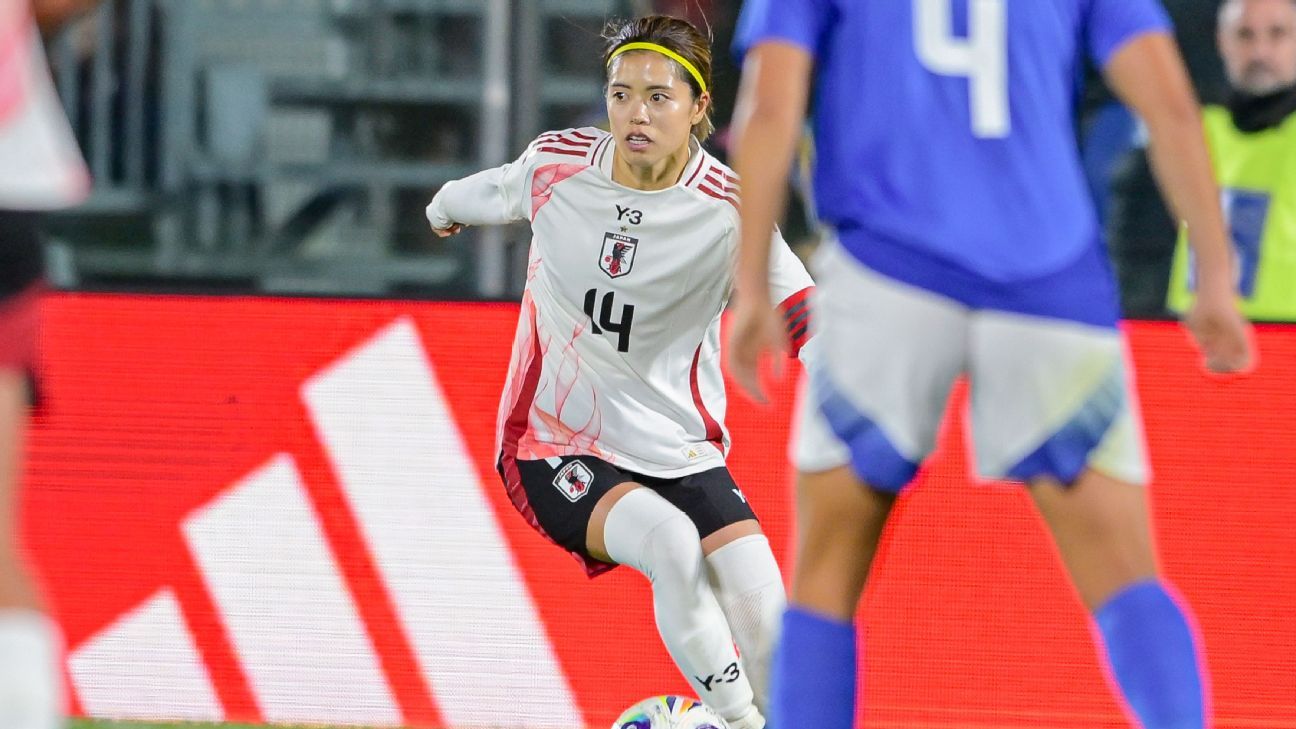
Japan captain Yui Hasegawa is among the best midfielders in the world, and she is crucial to Nadeshiko’s hopes of winning the AFC Women’s Asian Cup in Australia. Andrea Amato/NurPhoto via Getty Images
“There are several other teams that will be capable of winning the tournament but, of course, we are one of them.”
When he named his squad for the tournament earlier this month, Nielsen added: “It is not a tournament that has been easy to win for Japan historically.
“We want to make new history. This is why we cannot be happy until we have the final prize because we have a team that can win it.”
Just like four years ago, Japan certainly are capable of lifting the trophy on March 21 — but they will now be even more conscious that being one of the favourites to go all the way does not automatically mean they will.
Still, it would be brave to suggest they won’t — especially given Nadeshiko are chasing redemption.