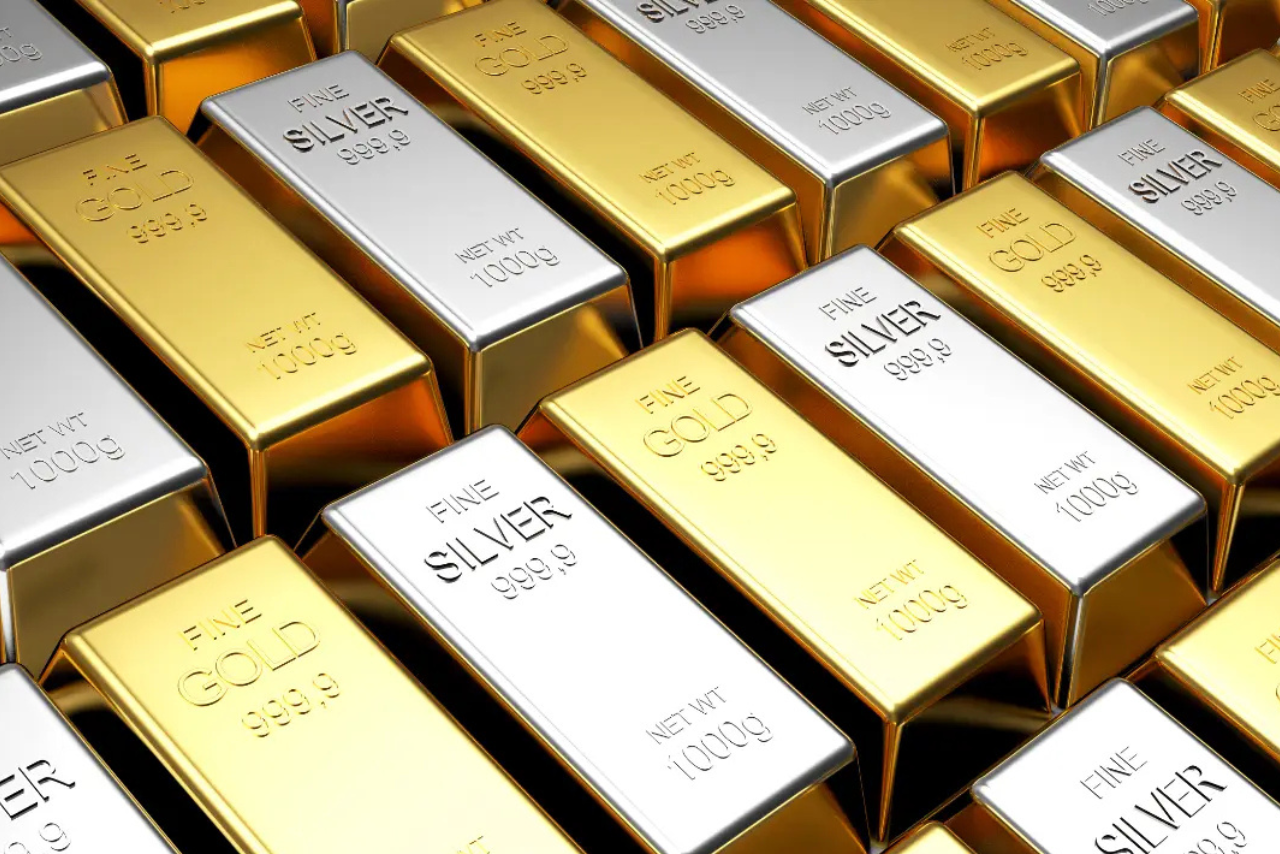
Synopsis: Gold and silver prices have seen a sharp correction, wiping out nearly USD 3 trillion in value. While experts view the fall as a healthy reset after a strong rally, rising volatility has opened up short-term trading opportunities for investors looking to profit from falling silver prices using inverse instruments.
Precious metals have long been seen as safe havens, especially during times of uncertainty. But when prices rise too fast, sharp reversals can follow just as quickly. As gold and silver erase trillions in market value in a matter of minutes, investors are being forced to rethink old assumptions. When the so-called Devil’s Metal starts sliding instead of shining, is there a way to make money on the way down?
Gold and silver prices saw a sharp sell-off, wiping out nearly USD 3 trillion dollars in market value. On the MCX, gold futures with April expiry fell around 5 percent to Rs 1,75,100 per 10 grams, a day after hitting a fresh lifetime high of Rs 1,93,096 per 10 grams. Gold contracts with February and June expiries also declined by around 6 percent each during early trading on Friday.
Silver prices mirrored the fall. Silver futures with March expiry dropped about 6 percent to Rs 3,75,900 per kilogram, while contracts with May and July expiries were also down nearly 6 percent each. The sell-off spilled over into gold ETFs as well. Nippon India ETF Gold BeES, which has delivered a return of 104 percent over the past one year, fell around 10 percent to trade at Rs 132. ICICI Prudential Gold ETF also plunged close to 10 percent, while Axis Gold ETF declined about 9 percent. UTI Gold ETF, Edelweiss Gold ETF, HDFC Gold ETF, Quantum Gold ETF, DSP Gold ETF, and several others also saw significant losses.
Silver ETFs were hit even harder. Mirae Asset Silver ETF fell around 13 percent, while Motilal Oswal Silver ETF dropped about 12.5 percent to Rs 330.01. HDFC Silver ETF and Nippon India Silver ETF plunged more than 14 percent each. Aditya Birla Sun Life Silver ETF, Groww Silver ETF, ICICI Prudential Silver ETF, Axis Silver ETF, UTI Silver ETF, Tata Silver ETF, and Kotak Silver ETF also declined sharply.
But Why?
The sharp drop in global precious metal prices is largely being linked to growing speculation that the US Federal Reserve could soon be led by a more hawkish chair. Spot gold fell 5 percent on Friday, just a day after touching a record high of USD 5,594.82. US President Donald Trump said he plans to announce his choice to replace Federal Reserve Chair Jerome Powell on Friday. This has fuelled intense speculation about who will head the US central bank after Jerome Powell steps down in May.
According to Tim Waterer, Chief Trade Analyst at KCM, the fall in gold prices has been driven by a mix of factors. These include the possibility of a less dovish Fed chair, a rebound in the US dollar, and gold prices cooling off after becoming overbought. Matt Simpson, Senior Analyst at StoneX, said that rumours suggesting Kevin Warsh could replace Jerome Powell as Fed Chair weighed on gold prices during Asian trading hours.
Market experts say the correction itself is not surprising. Ponmudi R, CEO of Enrich Money, said the pullback is normal given how fast prices had risen in recent weeks. He explained that gold had moved up too quickly and that this phase of cooling is healthy. He added that buying interest is still visible whenever prices fall, indicating that the broader trend remains positive. The current decline, he said, is mainly due to profit booking in both global and Indian markets. After weeks of strong gains, investors who entered at lower levels are locking in profits, which naturally puts short-term pressure on prices. However, this has not been strong enough to reverse the overall trend.
On the international COMEX exchange, gold has moved down into the USD 5,160-USD 5,320 range, after briefly rising above USD 5,600. Ponmudi described this as a technical reset rather than a shift in market sentiment. He noted that gold continues to trade well above its major moving averages, which typically signals consolidation rather than a reversal. He also pointed out that strong buying interest is emerging around the USD 5,050-USD 5,150 support zone.
Silver is showing a similar pattern. COMEX silver, currently trading around USD 108–USD 111, is consolidating after testing record highs of USD 121.6. Ponmudi said silver usually moves in sharp swings, both upward and downward, but as long as prices stay above key support levels, the broader momentum remains intact. Domestic price charts reflect the same trend. In India, gold continues to find strong support in the Rs 1,57,000-Rs 1,59,000 range, while silver is seeing steady buying around Rs 3,55,000-Rs 3,60,000, with buyers stepping in on every decline. But if silver is correcting, how can investors in India position themselves to profit on the downside?
One way investors can benefit from falling silver prices is through ProShares UltraShort Silver (ZSL). This ETF is designed to deliver two times the inverse (-2x) of the daily performance of the Bloomberg Silver SubindexSM, before fees and expenses. At present, ZSL is priced at around Rs. 146.18, or roughly USD 1.59.
The Bloomberg Silver SubindexSM is part of the broader Bloomberg Commodity Index and tracks the price movement of COMEX silver futures contracts. It does not hold physical silver. Instead, it is a rolling futures-based index, meaning contracts are gradually shifted from one expiry month to the next. This roll happens over five business days during specific months, usually starting on the sixth business day and ending on the tenth business day of the month. Each day, about 20 percent of the futures position is rolled forward, moving in steps from 0 percent to 20 percent, 40 percent, 60 percent, 80 percent, and finally 100 percent. The index reflects the performance of these futures contracts, including the impact of rolling, but does not include any income from cash holdings.
ZSL is currently the only ETF built specifically to profit when the daily price of silver futures falls. Investors can also buy fractional shares of the ETF. It allows traders to take inverse exposure to silver using a single ticker through a regular brokerage account, making it a simple way to position for a short-term decline. The fund aims to deliver -2x the daily return of its benchmark. This target applies strictly on a day-to-day basis. ZSL does not invest directly in silver. Instead, it gains exposure through futures contracts and swaps.
Key Risks Involved With ZSL
While investors can hold the ETF for more than one day, returns over longer periods may be very different from the daily target. These differences can be significant, especially during volatile markets. Smaller daily moves combined with high volatility tend to result in returns that are worse than the stated -2x target. On the other hand, larger daily moves and lower volatility can sometimes lead to better outcomes.
The longer the holding period, and the more frequently these conditions occur together, the more the ETF’s performance can drift from what investors might expect. Because of this, investors are advised to regularly track their positions and assess whether the fund still fits their risk tolerance and investment goals.
A key feature of ProShares UltraShort Silver is its daily leverage reset. At the end of every trading session, the fund resets its exposure so that each new day starts fresh based on the previous close. This means the ETF does not track silver’s cumulative movement over several days or weeks. Instead, its returns depend heavily on daily price changes, making it highly sensitive to short-term volatility rather than long-term trends.
This daily reset can produce outcomes that may surprise investors. For instance, if the ETF is bought at Rs. 100 and silver falls 5 percent in one day, the ETF would rise by about 10 percent to Rs. 110. If silver then rises 5 percent the following day, the ETF would fall roughly 10 percent, but that decline is calculated on Rs. 110, bringing the value down to about Rs. 99. Even though silver is close to where it started, the ETF has already lost value. Over time, repeated up-and-down price movements can compound, slowly eroding the ETF’s price, even though it continues to deliver its intended -2x exposure on individual days.
Conclusion
The sharp correction in gold and silver prices has shown how quickly sentiment can change in global commodity markets. While precious metals often regain their footing after such pullbacks, periods of heightened volatility also create opportunities for traders who are prepared and understand the risks involved.
Instruments like inverse ETFs can offer a way to benefit from short-term declines, but they are not meant for every investor or every market condition. Their performance depends heavily on daily price movements, timing, and discipline. Used carefully, they can serve as tactical tools during corrections. Used casually, they can deliver outcomes very different from what investors expect.
Disclaimer: The views and investment tips expressed by investment experts/broking houses/rating agencies on tradebrains.in are their own, and not that of the website or its management. Investing in equities poses a risk of financial losses. Investors must therefore exercise due caution while investing or trading in stocks. Trade Brains Technologies Private Limited or the author are not liable for any losses caused as a result of the decision based on this article. Please consult your investment advisor before investing.