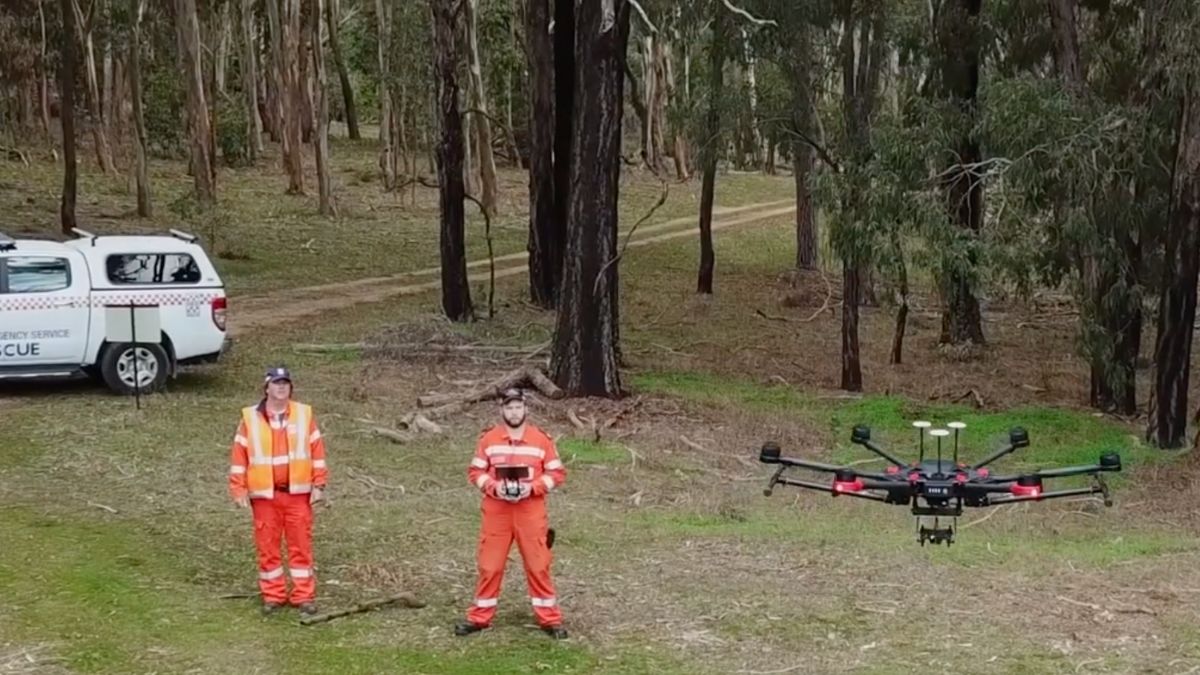
South Australia’s emergency response capability is getting a high-tech upgrade, with the State Emergency Service rolling out nine new drones designed to boost search and rescue operations across the state.
The new remotely piloted aircraft replace ageing equipment and form part of a $2 million investment in the 2025–26 State Budget to modernise the SES’s aerial reconnaissance, intelligence gathering and hazard assessment tools. With these additions, the SES now operates one of the largest emergency service drone fleets in South Australia, using real-time aerial vision and thermal imaging to locate missing people in low-visibility conditions and assess dangerous environments without placing crews at risk.
The drones come equipped with longer flight times, high-resolution visual and infrared cameras, integrated spotlights and loudspeakers, AI-assisted recognition of people, vehicles and boats, and smart mapping technology to improve situational awareness during emergencies. Across the state, the SES operates about 50 drones, which were deployed more than 500 times in 2025 alone, most often supporting SAPOL in time-critical missing person searches.
Six of the new drones will be stationed in regional locations including Port Lincoln, Quorn, Ceduna, Port Pirie, Gawler and Kangaroo Island, while three will be based in Adelaide. Looking ahead, the SES will also trial lightweight microdrones in 2026, allowing rapid deployment directly from response vehicles across both metropolitan and regional units.
Speaking on the upgrade, Minister for Emergency Services Rhiannon Pearce MP said access to the right equipment can be the difference between life and death. “This investment in drone technology means our SES volunteers can remotely assess landscapes and situations before they put themselves on the line for our community,” she said, noting the funding also supports training and Civil Aviation Safety Authority licensing for additional pilots.
SES Chief Officer Kristy Phelps said drone technology continues to evolve rapidly and demand for its use grows each year. “Having specialist skills like drone piloting opens the door for more people to volunteer and support their communities in new ways,” she said. SES Chief Remote Pilot Brad Flew added that the new units offer improved safety features and performance, ensuring the fleet remains reliable as technology advances.