Synopsis: The Indian government’s plan to build 100 new airports and 200 helipads aims to boost regional connectivity, meet rising aviation demand, and create jobs, benefiting key stocks like HAL, GMR and three more.
India has embarked on an ambitious infrastructure drive to transform its aviation sector by constructing 100 new airports and 200 helipads, connecting smaller towns and cities to major economic hubs. This initiative reflects the government’s focus on decentralising growth and making air travel more accessible across the country.
The expansion is expected to stimulate multiple sectors, from aircraft manufacturing and airport operations to construction and aviation services. With the Noida International Airport as a flagship project, the plan also aims to generate substantial employment opportunities and support long-term economic development across regions.
The Indian government has launched a massive infrastructure initiative aimed at transforming the country’s aviation landscape by building 100 new airports and 200 helipads. Announced by Prime Minister Narendra Modi during the inauguration of the Noida International Airport, this plan is designed to connect smaller towns and cities, integrating them into the national economic fabric.
Expanding Regional Connectivity
The primary objective of this expansion is to boost regional connectivity, which the government sees as a catalyst for trade and tourism. By bringing air travel to underserved areas, the initiative seeks to decentralise economic growth and make travel more accessible for millions.
This vision is backed by a revamped regional connectivity program, which has been granted a substantial budget of 288.4 billion rupees ($3 billion). This funding is scheduled to be deployed over a 10-year period, beginning in the 2026–27 fiscal year.
Meeting Surging Aviation Demand
India’s aviation sector is currently one of the fastest-growing in the world, with domestic airlines placing record-breaking aircraft orders to keep up with passenger demand. To support this influx of planes, the government is racing to provide the necessary ground infrastructure. Since 2014, the number of operational airports in India has more than doubled, growing from 74 to over 160 and this new phase of construction aims to maintain that momentum.
Economic Impact and Job Creation
Beyond travel, the buildout boom is expected to be a major engine for employment. The Prime Minister emphasised that the massive scale of these projects, combined with the operation of 100 new hubs, will create a high demand for skilled workers. From engineering and construction to aviation maintenance and hospitality, the plan is positioned to provide significant career opportunities for India’s youth across various ancillary industries.
The Jewel of the Expansion: Noida International
A centerpiece of this strategy is the Noida Airport at Jewar, which is set to become the largest airport in India upon completion. Spanning roughly 7,200 acres with six runways, the facility is designed to handle 12 million passengers annually in its initial phase. Managed by Zurich Airport International AG, the airport is expected to see a flight every two minutes, serving as a critical gateway connecting Northern India to the rest of the world.
Stocks that could benefit
Hindustan Aeronautics Ltd
HAL is expanding into civil aviation with its indigenous Dhruv helicopters and Dornier 228 aircraft. The government’s push for regional connectivity and the creation of new routes provides demand for HAL’s aircraft, while its new MRO hub in Nasik will service growing civil aviation operations.
With a market capitalisation of Rs. 2,46,574 cr, the shares of Hindustan Aeronautics Ltd closed at Rs. 3686.95 per share, increasing from its previous close of Rs. 3670.75 per share.
GMR Airports Ltd
As India’s largest private airport operator, GMR benefits from increased feeder traffic from Tier-2 and Tier-3 cities into its major metro hubs. The government’s plan to privatize 11 additional regional airports offers further opportunities for expansion and revenue growth. With a market capitalisation of Rs. 93,848 cr, the shares of GMR Airports Ltd closed at Rs. 88.88 per share, decreasing from its previous close of Rs. 89.30 per share.
InterGlobe Aviation Ltd
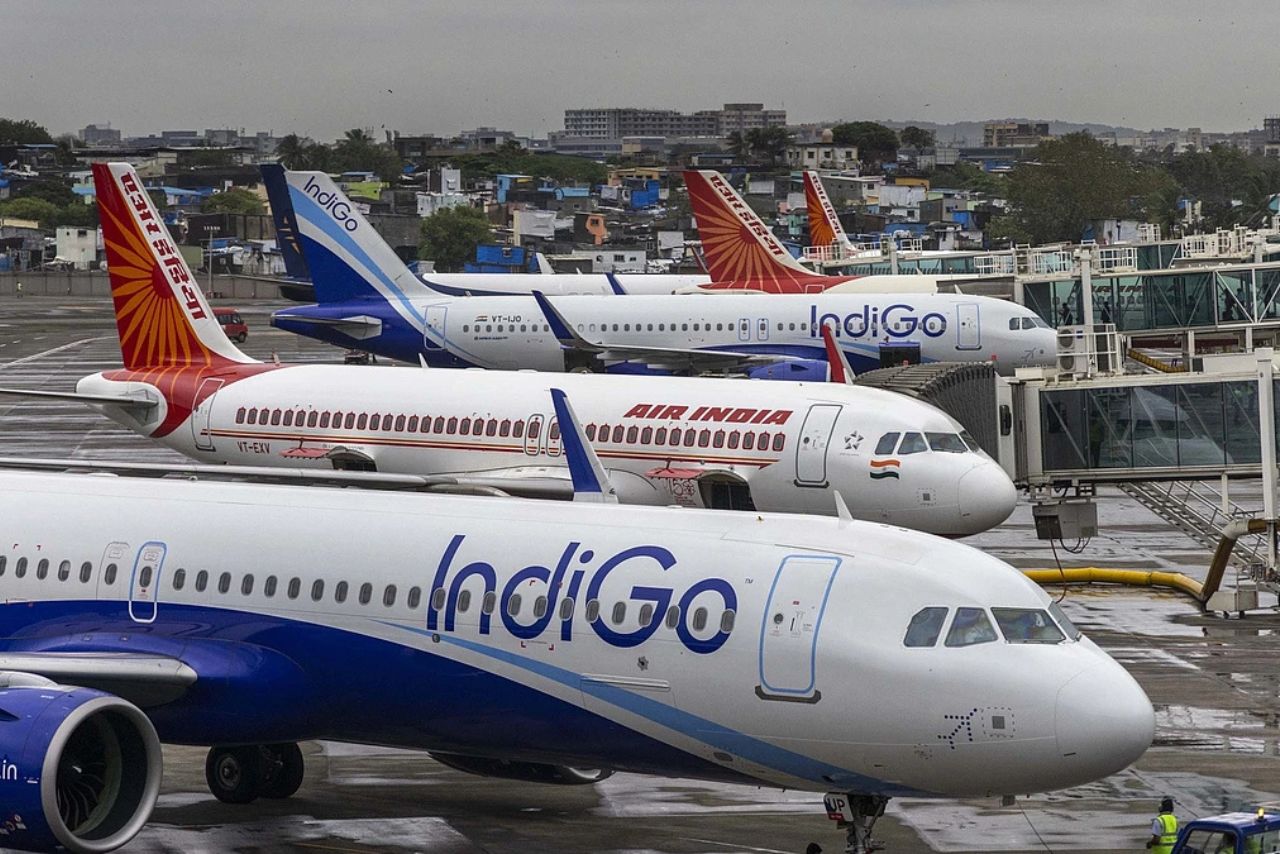
IndiGo’s ATR fleet allows it to dominate low-demand regional routes. Government subsidies under the revamped connectivity scheme help capture new passengers who later connect to larger domestic and international routes, boosting overall load factors.
With a market capitalisation of Rs. 1,62,149 cr, the shares of InterGlobe Aviation Ltd closed at Rs. 4,194.10 per share, increasing from its previous close of Rs. 4,180.90 per share.
Larsen & Toubro Ltd
L&T is one of the leading contractors for major greenfield airport projects including Noida and Navi Mumbai, and stands to gain directly from the government’s multi-billion-dollar construction outlay. Its Transport Infrastructure vertical will see significant order inflows over the next decade.
With a market capitalisation of Rs. 4,97,111 cr, the shares of Larsen & Toubro Ltd closed at Rs. 3,613.75 per share, increasing from its previous close of Rs. 3,607.55 per share.
Adani Enterprises Ltd
Adani Airports operates multiple airports across India and is aggressively investing to expand capacity. The addition of new regional airports and increased passenger traffic will enhance both aeronautical and non-aeronautical revenue streams for the group.
With a market capitalisation of Rs. 2,36,828 cr, the shares of Adani Enterprises Ltd closed at Rs. 1833.55 per share, decreasing from its previous close of Rs. 1842.50 per share.
Disclaimer: The views and investment tips expressed by investment experts/broking houses/rating agencies on tradebrains.in are their own, and not that of the website or its management. Investing in equities poses a risk of financial losses. Investors must therefore exercise due caution while investing or trading in stocks. Trade Brains Technologies Private Limited or the author are not liable for any losses caused as a result of the decision based on this article. Please consult your investment advisor before investing.